Introduction
In the vast and intricate world of agricultural chemicals, few products hold as much universal importance as urea. As the most widely used nitrogen fertilizer globally, urea is a cornerstone of modern food production, responsible for nourishing crops that feed billions. Its high nitrogen content (46%), cost-effectiveness, and versatility have cemented its status as an indispensable tool for farmers from the Americas to Asia. Beyond the field, urea serves as a critical raw material in numerous industrial processes, from plastics to automotive systems.
This article delves deep into the multifaceted role of urea, exploring its chemical foundation, its paramount applications in agriculture, its diverse industrial uses, and the dynamic forces shaping its global market. For businesses and agricultural professionals navigating the complex fertilizer trade, particularly in the vital Asian market, understanding these facets is key to making informed sourcing and application decisions. Platforms like Fertradeasia are instrumental in this ecosystem, providing crucial connectivity, market intelligence, and access to reliable suppliers of high-quality granular urea and other essential chemicals.
Understanding Urea: Chemical Properties and Production
Urea, scientifically known as carbamide, is an organic compound with the chemical formula CO(NH₂)₂. It appears as white, odorless, solid prills or granules that are highly soluble in water. This high solubility is a double-edged sword; it allows for easy application and rapid uptake but also necessitates careful management to prevent nitrogen loss through volatilization or leaching. The key to urea's dominance in agriculture is its remarkably high nitrogen content approximately 46% by weight, which is the highest among all solid nitrogen fertilizers. This concentration translates to efficiency in storage, transportation, and application.
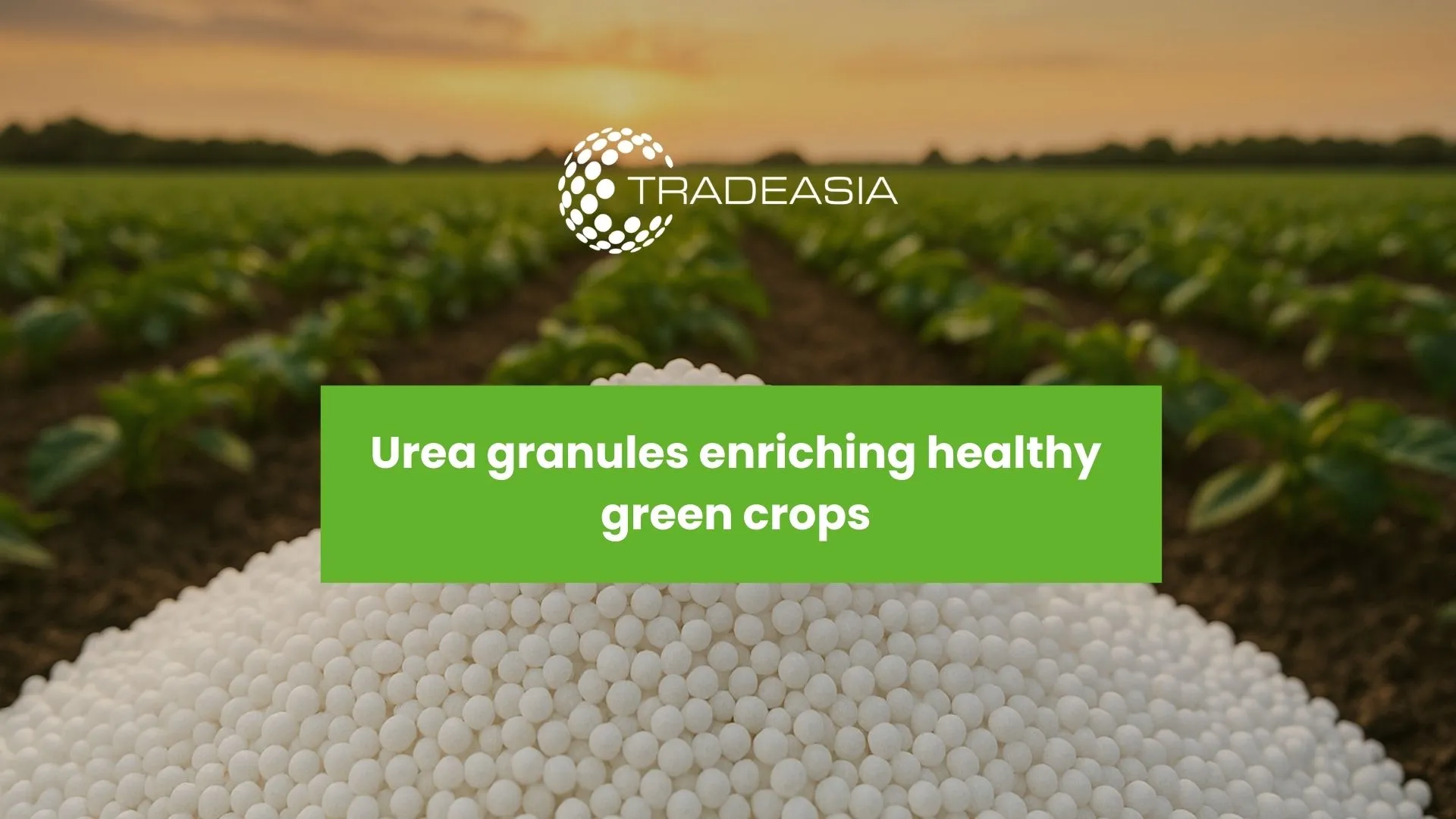
The industrial production of urea is primarily achieved through the Bosch-Meiser process, which involves a high-pressure reaction between ammonia and carbon dioxide. This synthesis typically occurs in large-scale fertilizer plants, often integrated with ammonia production facilities. The output is molten urea, which is then formed into either prills (small, spherical particles) or granules. Granular urea is often preferred for its superior physical properties, including better resistance to caking, reduced dust formation, and improved flowability, making it ideal for bulk handling and mechanized spreading. The production process and final form significantly influence the product's quality, storage stability, and performance in the field.
Urea in Agriculture: Primary Applications and Benefits
The primary and most critical application of urea is as a nitrogen fertilizer. Nitrogen is a fundamental macronutrient required for plant growth, essential for the synthesis of amino acids, proteins, chlorophyll, and DNA. Urea fertilizer provides a concentrated and readily available source of this vital element. It can be applied directly to the soil as a top-dressing or incorporated before planting. Furthermore, urea is a key component in many compound fertilizers (NPK blends) and is widely used in fertilizer solutions for foliar feeding and fertigation systems, offering flexibility to meet diverse crop needs and farming practices.
The benefits of using urea in agriculture are compelling. Its high nitrogen content means lower volumes are needed compared to other nitrogen sources like ammonium nitrate, reducing logistics and storage costs. It is also non-flammable and relatively safe to store and handle. However, effective use requires knowledge. Once applied to soil, the enzyme urease converts urea to ammonium carbonate. If not properly incorporated into the soil, this can lead to ammonia volatilization, a significant loss of nitrogen to the atmosphere. Best practices, such as deep placement, application before forecasted rain, or using urea treated with urease inhibitors, are crucial to maximize efficiency and minimize environmental impact, ensuring crops receive the full nutritional benefit.
Different forms cater to specific needs. Standard granular urea is ideal for broadacre broadcasting. Slow-release or coated urea products are engineered to match nitrogen release with crop uptake patterns, enhancing efficiency for high-value horticulture or in regions with high rainfall. The choice of product directly impacts yield, quality, and return on investment, making informed selection a critical part of farm management.
Industrial and Non-Agricultural Uses of Urea
While agriculture consumes the lion's share of global urea production (over 90%), its utility extends far beyond the farm. One of the most significant industrial uses is in the manufacture of urea-formaldehyde resins. These thermosetting resins are a workhorse of the wood products industry, used as adhesives in particleboard, medium-density fiberboard (MDF), and plywood. They offer fast curing times and strong bonds, making them essential for furniture and construction materials. Urea also serves as a key feedstock in the production of melamine, which is used for laminates, coatings, and flame-retardant materials.
Another major and growing application is in environmental control systems, specifically Selective Catalytic Reduction (SCR). Here, a high-purity aqueous urea solution, known as Automotive Grade Urea or Diesel Exhaust Fluid (DEF), is used to break down harmful nitrogen oxides (NOx) in the exhaust streams of diesel engines into harmless nitrogen and water. This technology is mandated in many countries to meet stringent air quality standards for trucks, buses, and heavy machinery. Furthermore, urea finds niches in the chemical industry as a stabilizer in explosives, a reactant in the production of barbiturates, and even in skincare products as a moisturizing agent. This diversification underscores urea's role as a versatile chemical building block.
The Global Urea Market: Trends and Insights
The global urea market is a dynamic and strategically vital sector, heavily influenced by energy prices, agricultural demand, trade policies, and geopolitical events. Asia-Pacific is both the largest producer and consumer, with China and India leading in consumption due to their vast agricultural sectors, while the Middle East, Russia, and Southeast Asia are major export hubs due to their access to low-cost natural gas, a primary feedstock. Recent years have seen significant volatility, with prices reaching record highs in 2022 due to the energy crisis and supply chain disruptions, before moderating somewhat.
Key trends shaping the market include a push towards premium, efficiency-enhanced fertilizers. As sustainability becomes a core concern, demand is rising for urea products with nitrification and urease inhibitors, as well as controlled-release coatings. These products command higher prices but offer demonstrable benefits in nitrogen use efficiency (NUE), reducing environmental losses. Another trend is the tightening of product specifications, especially for industrial grades like DEF, where purity is paramount. For buyers and traders, navigating this landscape requires real-time insight into regional price differentials, port logistics, and policy changes precisely the kind of intelligence a platform like Fertradeasia is designed to provide.
Sourcing Quality Urea: A Guide for Buyers
For importers, distributors, and large-scale farming operations, sourcing reliable, high-quality urea is a complex but critical task. The first step is defining specifications. Agricultural buyers must consider the nitrogen content (minimum 46%), biuret content (low levels are crucial for certain sensitive crops like citrus), moisture content, granule hardness, and size distribution. For industrial uses, such as DEF production, ultra-high purity with minimal metals and other contaminants is non-negotiable. Understanding these specifications and how they align with your end-use is fundamental to avoiding costly quality disputes.
Beyond product specs, sourcing involves navigating logistics, financing, and supplier reliability. Key considerations include Incoterms (FOB, CFR, etc.), vessel chartering for bulk shipments, bagging requirements, and timely execution of letters of credit. The reputation and financial stability of the supplier are paramount. This is where integrated chemical trading and insight platforms add immense value. A service like Fertradeasia connects buyers with vetted suppliers across Asia and beyond, provides transparent market data on granular urea price trends, and offers logistical support. They demystify the process, mitigate risk, and ensure that buyers receive product that meets their exact specifications, on time and at a competitive price, whether for standard agricultural urea or specialized industrial grades.
Conclusion
Urea stands as a testament to the synergy between chemical innovation and human necessity. Its role in sustaining global food security is irreplaceable, while its industrial applications continue to evolve and expand. From the granular prill spread across vast wheat fields to the high-purity fluid injected into diesel exhaust systems, urea's versatility is unmatched. Understanding its properties, applications, and the market forces that govern its trade is essential for anyone involved in agriculture, chemicals, or related industries.
As the market trends towards greater efficiency and sustainability, the importance of sourcing the right type of urea from reliable partners becomes even more pronounced. Leveraging resources that offer deep market insight, supplier networks, and trade facilitation, such as those provided by Fertradeasia empowers businesses to navigate the complexities of the global fertilizer trade with confidence. In securing a supply of this essential chemical, stakeholders are not just conducting commerce; they are participating in a critical chain that supports both economic development and the foundational need to feed and sustain the world.
Leave a Comment