Introduction
Copper sulphate pentahydrate plays a key role in fertilizer use as a reliable source of copper, an essential micronutrient for healthy crop growth. Many agricultural soils around the world lack enough copper to support strong plant development, especially under intensive farming. When this shortage goes untreated, crops struggle with weaker growth, poor flowering, and lower resistance to disease. Copper sulphate pentahydrate helps correct these gaps and supports important plant functions such as enzyme activity, photosynthesis, and natural defense systems.
With roughly 25 percent elemental copper in a highly plant-available form, copper sulphate pentahydrate fits easily into NPK fertilizers, water-soluble products, and specialty blends. Its consistent quality and good solubility make it suitable for cereals, fruits, vegetables, and other high-value crops. As farmers focus more on balanced nutrition and yield stability, the importance of a dependable global supply chain for this material continues to grow.
Supply Chain Overview
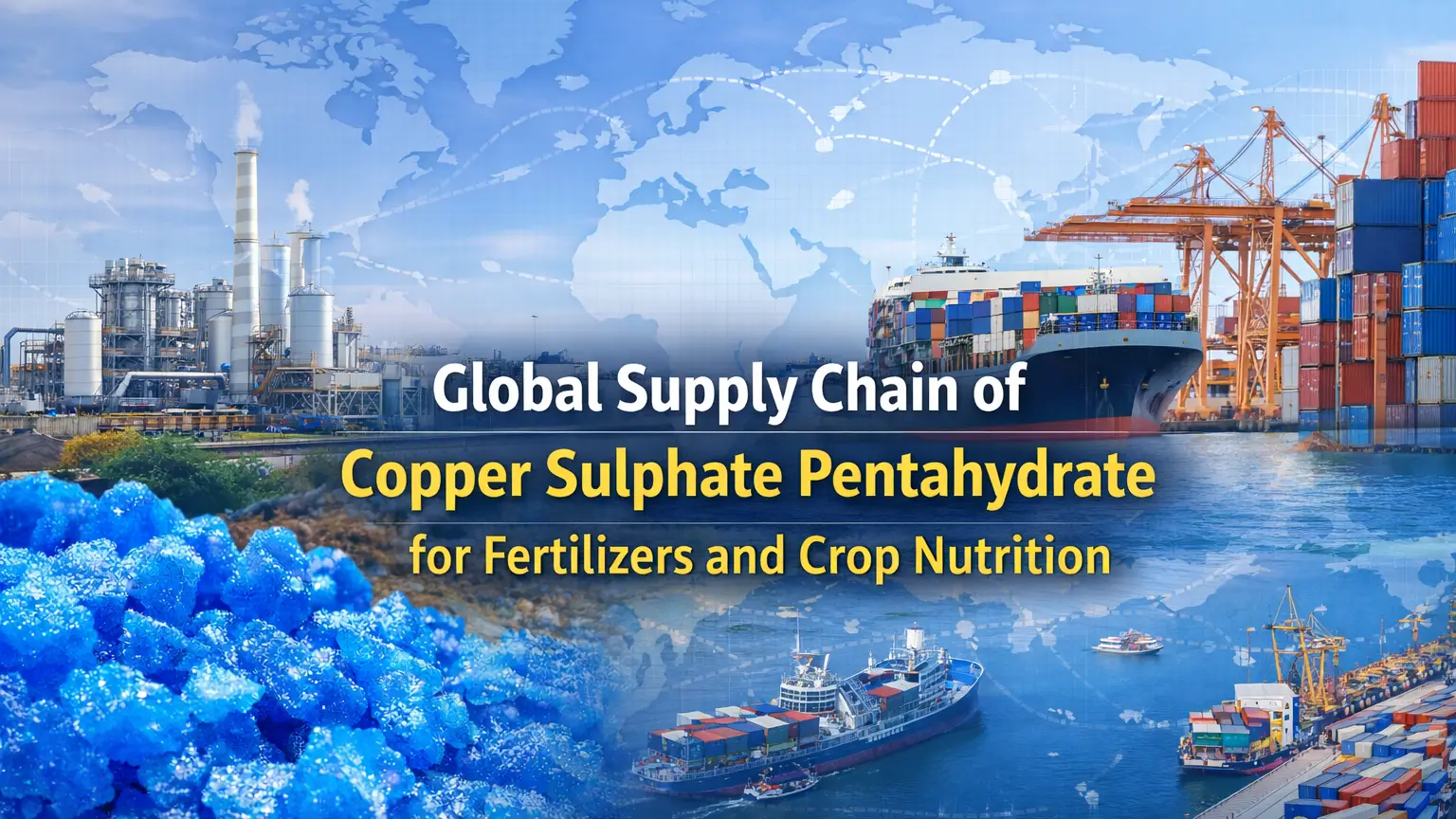
The supply chain for copper sulphate pentahydrate begins with copper sourcing and ends with delivery to fertilizer blenders and growers. It connects mining regions, chemical producers, logistics providers, and agricultural distributors. This global structure supports steady availability even as demand for micronutrient fertilizers increases.
Upstream Stages
Raw copper enters the supply chain through copper ore mining and recycled scrap metal. These materials are refined into copper metal or compounds such as copper oxide and copper carbonate, which are then used as feedstocks. Sulfuric acid, often sourced from metal smelters, is another key input. Major copper-producing countries such as Chile, Peru, and China supply much of the raw material, while recycling helps lower costs and reduce environmental impact.
Manufacturing Stages
Manufacturing involves reacting copper metal or copper compounds with dilute sulfuric acid in controlled conditions. The process creates a copper sulphate solution that is cooled to form pentahydrate crystals. These crystals are separated, dried, and tested to meet fertilizer-grade standards, including copper content and low heavy metal levels. Careful control of temperature, acidity, and crystallization ensures good solubility and consistent product quality for agricultural use.
Distribution Stages
Once produced, copper sulphate pentahydrate is packed in bags or shipped in bulk and transported by rail or sea to fertilizer plants and regional distributors. Large exporting countries, especially in Asia, supply markets across Asia-Pacific, Latin America, Africa, and North America. Reliable logistics and quality certification help fertilizer producers maintain smooth operations and consistent product performance.
Raw Materials and Production
Copper sulphate pentahydrate depends on stable access to copper-rich inputs and sulfuric acid. Producers often locate plants close to mining or smelting operations to reduce transport costs and improve supply security.
Copper scrap, copper oxide, and copper carbonate form the main copper sources, while sulfuric acid acts as the reacting agent. High-quality raw materials help limit unwanted impurities such as arsenic or lead, which is important for meeting agricultural standards. Recycling copper scrap has become increasingly important, helping producers control costs and reduce environmental pressure.
China leads global production, accounting for more than half of total output, followed by India, the United States, and Chile. These regions benefit from strong mining bases and established chemical industries. New capacity in Peru and parts of Europe is emerging as producers adapt to stricter environmental rules and rising regional demand.
Global Trade and Distribution
Copper sulphate pentahydrate moves through a well-established global trade network. Asia acts as the main production and export base, while major farming regions form the demand centers. Large volumes move from China and India to Southeast Asia, Latin America, Africa, and North America, supporting fertilizer production and animal feed uses.
Trade is mainly business-to-business. Producers sell in bulk to traders and distributors, who then supply fertilizer blenders and large agribusiness operations. Most shipments travel by sea, followed by inland transport to warehouses that support seasonal fertilizer demand. This structure helps ensure timely supply during key planting periods.
Pricing and Cost Drivers
Prices for copper sulphate pentahydrate are closely tied to upstream copper and sulfuric acid markets. Copper typically makes up the largest share of production cost, often 60 to 70 percent. Energy prices, processing costs, and freight add further pressure, especially during periods of supply disruption or high fuel costs.
Regional prices vary widely. Large producers with domestic copper supply tend to offer lower prices, while import-dependent regions face higher costs due to transport and energy expenses. Environmental compliance requirements in some regions also raise production costs, creating price differences that shape global trade flows.
Challenges and Opportunities
The supply chain faces several risks. Disruptions in copper mining from strikes, weather events, or political instability can quickly affect availability and pricing. Heavy reliance on a small number of exporting countries also increases exposure to trade policy changes and shipping delays. Environmental regulations on copper use add further complexity, especially in regions with strict soil and water protection rules.
At the same time, strong opportunities support long-term growth. Farmers are moving away from basic NPK use toward balanced nutrition, which increases demand for micronutrients like copper. Growth in horticulture, protected cultivation, and precision farming creates demand for higher-quality and more specialized copper sulphate pentahydrate products. As soils continue to lose trace elements through intensive use, copper remains a core nutrient in modern crop nutrition strategies.
Supply Chain Outlook (2026–2033)
Between 2026 and 2033, the supply chain for copper sulphate pentahydrate is expected to expand steadily, driven mainly by agricultural demand. Global production capacity is projected to grow at around five percent per year, with Asia remaining the dominant supply region. Investments in cleaner production methods and recycling are expected to improve efficiency and help producers meet environmental standards.
Trade flows from Asia to Southeast Asia, Latin America, and Africa are likely to rise as micronutrient deficiencies become more visible in intensive farming regions. Improvements in digital logistics and inventory management will support faster and more reliable delivery. While geopolitical and regulatory pressures may raise costs at times, the overall outlook remains positive. Copper sulphate pentahydrate is set to remain an essential link in the global fertilizer supply chain, supporting crop nutrition and food production well into the next decade.
Conclusion
The global supply chain of copper sulphate pentahydrate plays a critical role in supporting modern fertilizer production and crop nutrition. From copper mining and recycling to chemical processing and international distribution, each stage contributes to the reliable delivery of a key micronutrient needed to maintain plant health and stable yields. Its consistent copper content, strong solubility, and compatibility with common fertilizer formulations make copper sulphate pentahydrate a preferred choice for addressing copper deficiencies across cereals, fruits, vegetables, and other high-value crops.
Looking ahead, demand for copper sulphate pentahydrate is expected to remain strong as agriculture continues to shift toward balanced nutrition and more efficient input use. While the supply chain faces challenges from raw material price swings, regulatory pressure, and geographic concentration of production, ongoing investment in cleaner technologies, recycling, and diversified capacity is helping reduce risk. With careful sourcing, quality control, and targeted application, copper sulphate pentahydrate is likely to remain a cornerstone of micronutrient fertilizer supply, supporting sustainable food production and resilient farming systems through 2033 and beyond.
Leave a Comment