Introduction
The global agriculture sector is entering a new era of pressure as countries race to strengthen food security for a rapidly growing population. Fertilizers remain a cornerstone of this effort, helping farmers maintain healthy soils and raise crop productivity. Among the many nitrogen fertilizers used today, ammonium nitrate continues to stand out. Thanks to its efficient nutrient delivery and dependable performance, it plays a key role in modern, high-yield farming systems.
This article explores how ammonium nitrate functions, why it is so valued in agriculture, and what the global market outlook looks like through 2030. It also highlights the major forces shaping demand across regions, as well as the challenges and opportunities that producers, traders, and end-users must navigate. With digital platforms like FertradeAsia improving market visibility and trade connections, the fertilizer supply chain is becoming more accessible than ever.
What is Ammonium Nitrate?
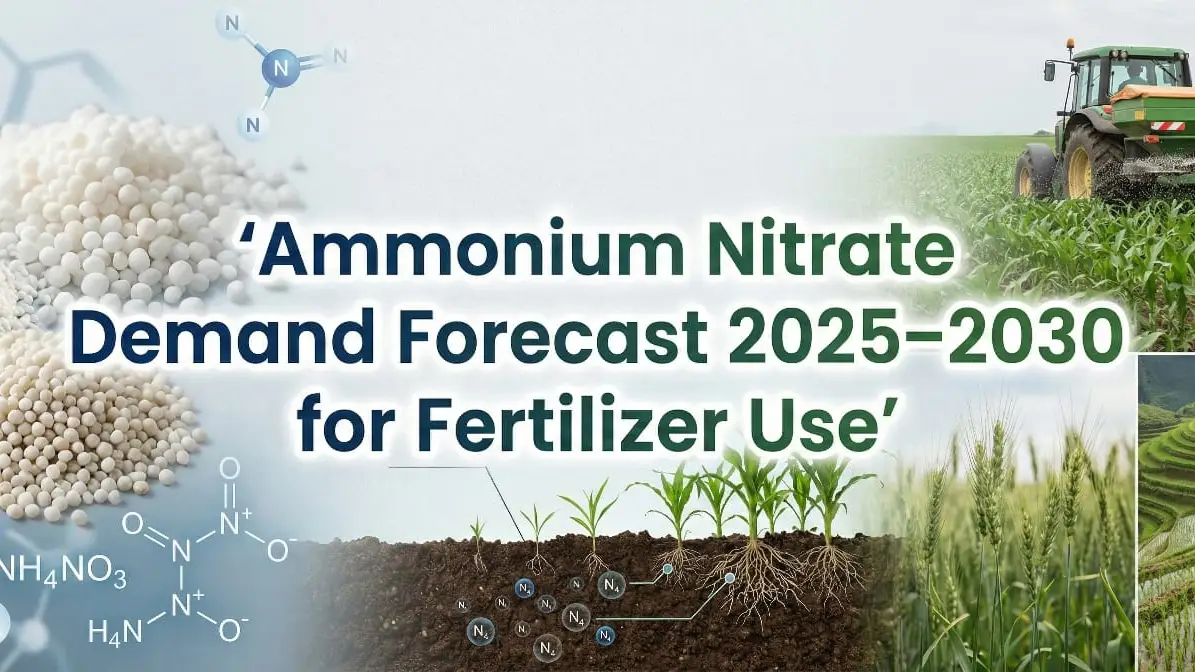
Ammonium nitrate (NH₄NO₃) is an inorganic fertilizer salt that delivers nitrogen in two highly useful forms: ammonium (NH₄⁺), which releases nitrogen gradually, and nitrate (NO₃⁻), which plants can absorb immediately. This combination makes it one of the most efficient nitrogen sources for crops such as wheat, barley, corn, and forage grasses.
It is produced by reacting ammonia with nitric acid and typically contains 33–34% nitrogen, placing it among high-analysis fertilizers. Its nutrient density helps reduce transport and handling costs, making it suitable for both large-scale farms and commercial distributors.
Ammonium nitrate usually comes in granular or prilled form and dissolves quickly in soil, making it ideal for early-season applications or any cropping system where crops need nitrogen right away.
Key Applications in Agriculture
Farmers use ammonium nitrate primarily as a nitrogen fertilizer because it provides both fast-acting and steady nutrient release. This helps support:
- Quick early growth from immediate nitrate uptake
- Steady feeding as ammonium converts to nitrate over time
- Strong chlorophyll formation and efficient photosynthesis
- Better protein synthesis, leading to healthier, more productive crops
Its performance makes it valuable in cereals and pasture systems. Many farmers apply it in multiple doses throughout the season to maintain consistent nitrogen levels and optimize yields.
Beyond direct use, ammonium nitrate also plays a key role in:
- NPK blends
- Calcium ammonium nitrate (CAN) formulations
- Precision agriculture and controlled-release fertilizers
- Industrial and mining explosives (ANFO), where it acts as an oxidizer
This dual agricultural and industrial demand highlights its importance in global supply chains.
Agronomic and Economic Advantages
The benefits of ammonium nitrate extend beyond basic nutrient delivery. Key advantages include:
1. High Nitrogen Efficiency
The nitrate portion feeds plants immediately, while the ammonium fraction lingers in the soil, ensuring longer availability. This increases nitrogen-use efficiency and helps farmers get more from every ton applied.
2. Strong and Consistent Crop Response
Because it provides a balanced nitrogen release, crops often show steady early growth, and improved overall performance.
3. Reliable Across Different Soil and Climate Conditions
In regions with cooler temperatures or slower biological activity, ammonium nitrate often outperforms urea because plants can take up nitrate instantly.
4. Practical for Transport and Handling
Its high nutrient content and granular form make it easy to ship, store, and spread, which is crucial for commercial-scale operations.
Regional Demand Trend at Ammonium Nitrate
The ammonium nitrate market is evolving quickly, shaped by rising food demand, sustainability expectations, and geopolitical uncertainties.
- Asia-Pacific remains the fastest-growing region, driven by large fertilizer-consuming nations like India and China. Market growth is supported by intense cropping systems and rising food security priorities.
- Latin America continues to expand due to increased crop intensification and mining activity.
- North America and Europe show moderate but stable growth centered on regulated, sustainable fertilizer practices.
- Middle East & Africa represent emerging demand hubs as investments in agrotechnology and infrastructure rise.
Market Outlook and Demand Forecast (2025–2030)
Global demand for ammonium nitrate is expected to grow steadily through 2030, with forecasts pointing to a compound annual growth rate (CAGR) ranging from 4.1% to 8.5%. This growth is driven mainly by rising fertilizer consumption across major agricultural regions, while mining and construction continue to contribute significantly as secondary demand sectors.
In terms of volume, the market is projected to increase from about 51 million tons in 2025 to roughly 63 million tons by 2030, reflecting an average CAGR of 4.3%. The value of the market is also set to expand noticeably, with estimates placing it between USD 42.4 and 42.71 billion by 2030, up from the current range of USD 17–30 billion. Fertilizer applications will continue to dominate overall demand, representing 45–60% of total consumption, while explosives used in mining and quarrying will remain the second-largest segment as countries expand construction activity and resource extraction.
Price trends are expected to remain relatively stable over the forecast period, with ammonium nitrate projected to trade between USD 300 and 450 per ton by 2030. However, this stability may be periodically disrupted by fluctuations in natural gas prices, which directly affect ammonia production costs and, consequently, ammonium nitrate pricing.
Regionally, the Asia-Pacific market is anticipated to lead global growth with a CAGR of around 5.6%, supported by intensive cropping systems and expanding fertilizer use in major agricultural economies. Latin America is expected to grow at about 4.5%, driven by crop intensification and robust resource extraction sectors. Europe and North America will show more moderate but steady growth at approximately 4.3%, aligned with mature agricultural markets and strict but stable regulatory environments. Meanwhile, the Middle East and Africa are poised for emerging expansion, with growth estimates ranging from 4.0% to 4.5%, supported by increasing investments in agriculture and infrastructure.
Conclusion
Ammonium nitrate continues to be a crucial fertilizer ingredient and a key driver of global food production. Its well-balanced nitrogen release, high efficiency, and strong performance across climates ensure its ongoing relevance in modern agriculture.
By 2030, demand is set to keep rising—powered by agricultural intensification, expanding mining activity, and innovations in sustainable fertilizer technologies. As FertradeAsia streamline market access and trading efficiency, industry stakeholders can better navigate pricing, logistics, and regulatory challenges.
For producers, traders, and agricultural planners, understanding both the agronomic value and the market landscape of ammonium nitrate is essential for strategic decision-making in the rapidly changing fertilizer industry.
Leave a Comment