Explore our network of country and industry based websites to access localized information, product offerings, and business services across our group.
Log in to start sending quotation requests for any product.
Don't have an account? Sign Up Here
Home Morocco's DAP Exports Surge as China Restricts Trade in 2026
Trade Insights | Supply Chain | 16 April 2026
Introduction
The Strategic Importance of Diammonium Phosphate (DAP)
China's 2026 Trade Policy Shift: A Market Catalyst
Morocco's Ascent as a Global DAP Powerhouse
Global Market Implications and Regional Dynamics
Navigating the Future: Opportunities and Strategic Sourcing
Conclusion
The global fertilizer landscape is on the cusp of a significant realignment, driven by geopolitical strategy, resource nationalism, and the relentless demand for agricultural productivity. A pivotal development is emerging for 2026, as indications point towards China imposing stricter controls on its fertilizer exports, particularly for key products like Diammonium Phosphate (DAP). This anticipated policy shift is creating ripples across international agribusiness, compelling import-dependent nations to urgently diversify their supply chains. In this evolving scenario, one nation is poised to capitalize dramatically: the Kingdom of Morocco.
With its vast phosphate rock reserves—the largest in the world—Morocco has long been a sleeping giant in the finished fertilizer sector. The potential constriction of Chinese DAP exports in 2026 acts as a powerful catalyst, accelerating Morocco's strategic plans to transform from a raw material supplier into a leading global exporter of high-value, processed phosphate fertilizers. This article delves into the mechanics of this shift, analyzing the product at its core, the market forces at play, and the profound implications for global agriculture and trade.
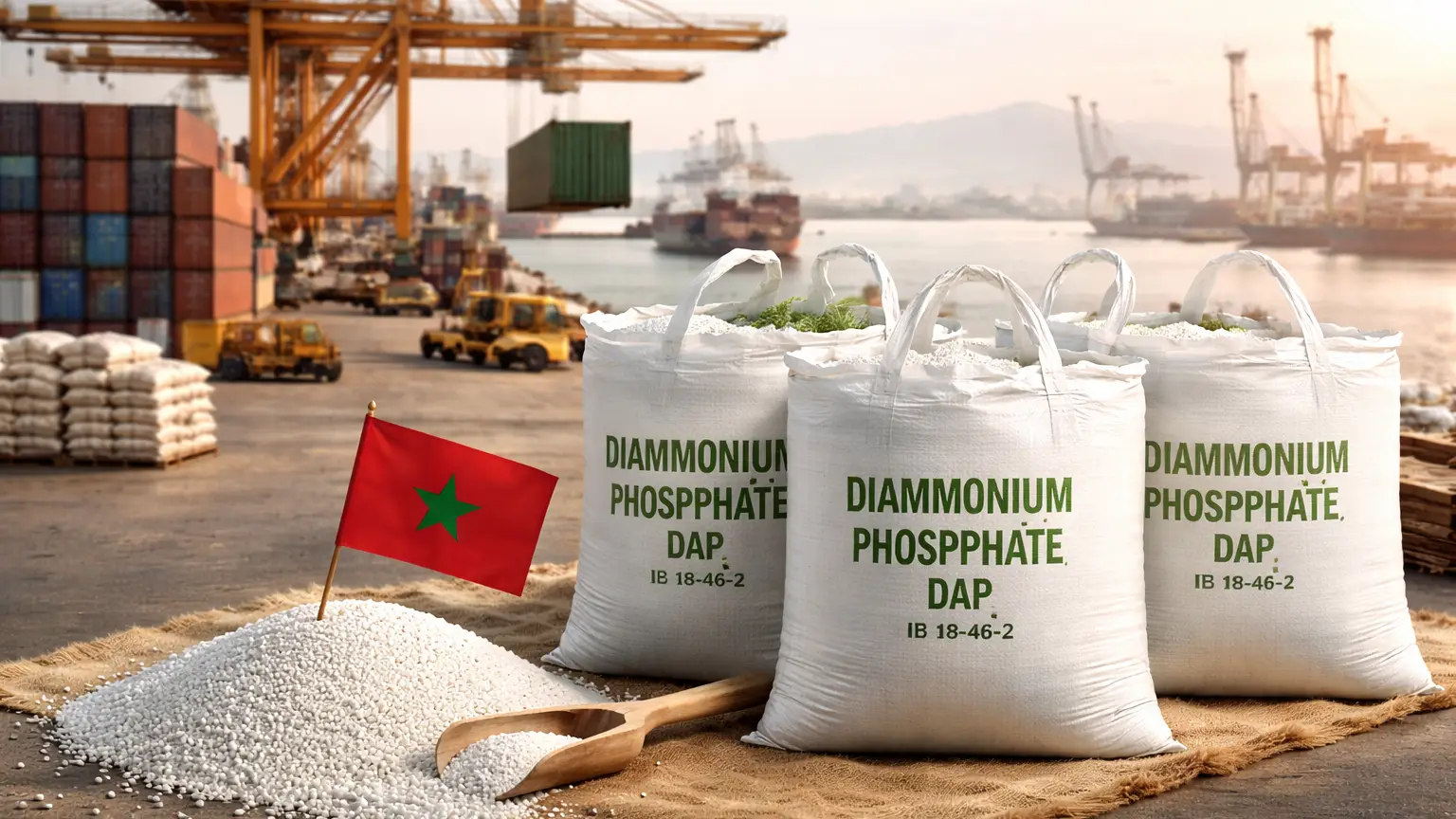
Diammonium Phosphate is not merely a fertilizer; it is a cornerstone of modern intensive agriculture. Classified as a complex fertilizer, it provides two of the three primary macronutrients in a highly concentrated, water-soluble form: a significant 18% Nitrogen (N) and 46% Phosphorus Pentoxide (P2O5). This high-analysis formulation (often expressed as 18-46-0) makes DAP exceptionally efficient for transportation, storage, and application, delivering a powerful nutritional punch per unit. Its role is critical in the early growth stages of crops, promoting robust root development, stem strength, and overall plant vitality, which directly translates to higher yields.
The applications of DAP fertilizer are vast and varied. It is most commonly used as a base fertilizer, applied at or before planting for a wide range of staple crops including wheat, corn, rice, and oilseeds. Its granular form allows for easy blending with other fertilizers like potash and urea to create customized NPK mixes tailored to specific soil and crop needs. Furthermore, its chemical properties make it a key ingredient in the manufacture of other fertilizer products and even as a fire retardant. For major agricultural economies from Brazil to India and across Europe, consistent access to affordable DAP is a non-negotiable component of national food security strategies.
Specifications for high-quality DAP are stringent. Premium grades typically have a minimum of 18% N and 46% P2O5, with low moisture content to prevent caking and ensure free-flowing granules. The granule size is carefully controlled for uniform application, and products with low levels of heavy metals and impurities are preferred. As a complex fertilizer, its value lies in this precise, reliable composition, which allows farmers to make accurate nutrient management plans—a reliability that will be paramount as traditional supply sources face uncertainty.
For over a decade, China has been the world's swing supplier of Diammonium Phosphate and other phosphate fertilizers. Its export volumes have acted as a balancing mechanism for global prices and availability. However, a strategic inward turn is underway. Driven by the dual objectives of ensuring domestic food security and controlling the environmental impact of its chemical industry, Chinese authorities are expected to formalize and tighten export restrictions by 2026. This may involve stricter quotas, higher export tariffs, or more rigorous environmental compliance checks for producers, effectively prioritizing domestic agricultural needs over international trade.
The data underscores the potential shock of this shift. In recent years, China has accounted for approximately 25-30% of global DAP exports. A significant reduction of this volume would instantly create a supply deficit estimated in the millions of tonnes. Markets in South Asia (India, Pakistan), Southeast Asia, and Oceania, which have relied heavily on Chinese cargoes, would be the most immediately impacted. The resulting supply vacuum would trigger competitive bidding, price volatility, and a frantic search for alternative sources, setting the stage for a new era in the phosphate trade.
This policy move is not occurring in isolation. It is part of a broader trend of resource nationalism and supply chain re-evaluation post-pandemic. Countries are increasingly viewing critical agricultural inputs like fertilizers through a lens of strategic vulnerability. China's decision, therefore, accelerates a pre-existing need for importers to de-risk their supply chains. The search for reliable, geopolitically stable partners with long-term production capacity is no longer a strategic advantage but a necessity, directly opening the door for Morocco's OCP Group (Office Chérifien des Phosphates) to assert its global role.
Morocco's advantage is rooted in a unique geological endowment: it controls over 70% of the world's known phosphate rock reserves. Through its state-owned industrial champion, OCP Group, the kingdom has executed a visionary, multi-billion dollar investment strategy over the past 15 years. The goal has been clear: move down the value chain from rock exporter to a manufacturer of finished, high-margin fertilizers. This has involved massive investments in mining efficiency, chemical processing plants, port logistics at Jorf Lasfar and Mohammed VI, and a global distribution network.
In anticipation of market shifts like China's, OCP has been systematically increasing its production capacity for DAP and other complex fertilizers. New mega-plants and expansion projects are coming online, designed to add millions of tonnes of annual DAP output. Unlike exporters with limited raw material access, OCP's production is fully integrated from mine to finished granule, providing unparalleled control over cost, quality, and scale. This vertical integration insulates it from raw material price shocks that affect competitors and guarantees long-term supply security for its partners.
Morocco's strategic positioning is further enhanced by its geography. With coastlines on both the Atlantic and Mediterranean, it boasts logistical advantages for serving markets in the Americas, Europe, Africa, and even parts of Asia. OCP has complemented this with a "local for local" strategy, establishing blending units and joint ventures in key markets like Ethiopia, Nigeria, and India to produce customized fertilizers close to the end-user. This combination of raw material sovereignty, industrial scale, and market-focused logistics positions Morocco not just as an alternative supplier, but as the new anchor of global DAP supply post-2026.
The reconfiguration of DAP trade flows will have distinct regional impacts. In the Americas, Brazil—the world's largest fertilizer importer—may see a shift in its sourcing matrix. While it will continue to rely on producers in the United States and the Middle East, Morocco's Atlantic ports offer a competitive shipping route for supplemental volumes. For India, the world's second-largest consumer, the situation is more pressing. Its annual subsidy program, which procures massive amounts of DAP, will need to forge stronger, long-term offtake agreements with OCP and other suppliers to hedge against price spikes and ensure timely availability for its millions of farmers.
European and African markets stand to benefit significantly from Morocco's rise. European nations, seeking to reduce dependency on Russian fertilizers and now potentially Chinese ones, will find a stable, nearby partner in Morocco. For Africa, the implications are transformative. OCP's focus on developing crop-specific fertilizer blends for African soils, coupled with infrastructure investments on the continent, can directly enhance regional food production and reduce the foreign exchange burden of imports. This shift could catalyze a "South-South" cooperation model in agricultural development, with Morocco at its center.
From a price perspective, the initial market reaction to China's restrictions may be inflationary, as buyers scramble to cover shortfalls. However, Morocco's planned capacity increases are designed to fill this gap. If executed smoothly, they could help stabilize prices in the medium term, though likely at a higher floor than the era of abundant Chinese exports. The market will transition from one dominated by a price-sensitive swing supplier to one anchored by a strategic, capacity-driven supplier, changing the fundamental dynamics of contract negotiations and trade relationships.
For global importers, traders, and agricultural cooperatives, this transition presents both a challenge and an opportunity. The key to navigating the new landscape will be proactive relationship-building and supply chain diversification. Relying on spot purchases from volatile markets will become a high-risk strategy. Instead, forming strategic partnerships with primary producers like OCP Group, or engaging with established global distributors and platforms that have direct access to these new supply lines, will be crucial. This is where integrated service providers in the fertilizer trade become invaluable partners.
Platforms like fertradeasia.com exemplify the modern approach to navigating complex global fertilizer markets. By offering market intelligence, logistical coordination, and direct access to a network of reliable suppliers including major producers, such services help buyers mitigate risk. They provide the transparency and expertise needed to secure contracts for products like Diammonium Phosphate in a competitive environment, ensuring not just supply, but also guidance on optimal application, blending, and timing to maximize agronomic and economic returns.
The future will also see an increased emphasis on fertilizer efficiency and sustainability. Morocco's OCP is investing in research on precision agriculture and enhanced efficiency fertilizers. Buyers should therefore look for suppliers who offer not just the product, but also the agronomic support and innovative solutions that help farmers use DAP more effectively, reducing environmental footprint while maintaining yield goals. This holistic approach to nutrient management will define successful sourcing strategies in the coming decade.
The anticipated restrictions on Chinese Diammonium Phosphate exports in 2026 are set to be a watershed moment for global agriculture. This policy shift will accelerate the rise of Morocco as a preeminent, integrated supplier of DAP and other complex fertilizers, reshaping trade routes and strategic alliances. For the global farming community, understanding this transition is essential for planning and securing the nutrient inputs that underpin food security. While short-term adjustments and price fluctuations are likely, the long-term outlook points to a more diversified, though reconfigured, global phosphate market, with Morocco playing a central and stabilizing role.
Disclaimer: This article is provided for informational and market insight purposes only. It is not intended as technical, safety, or professional advice for the handling, application, or procurement of fertilizers. Market conditions, trade policies, and product specifications are subject to change. Readers are strongly advised to verify all information independently with qualified experts, consult official product documentation such as Material Safety Data Sheets (MSDS/SDS), and contact our team or the product manufacturer for guidance on specific applications, compliance, and suitability for their unique requirements.
We're committed to your privacy. Tradeasia uses the information you provide to us to contact you about our relevant content, products, and services. For more information, check out our privacy policy.


 English
 Indonesian
 简体字
简体字
 العربية
 Español
 Français
 Português
 日本語
日本語
 한국어
한국어
 Tiếng Việt




















