Explore our network of country and industry based websites to access localized information, product offerings, and business services across our group.
Log in to start sending quotation requests for any product.
Don't have an account? Sign Up Here
Home MAP Price Shock 2026: Geopolitics Reshape Fertilizer Trade
Trade Insights | Supply Chain | 16 April 2026
Introduction
Understanding Monoammonium Phosphate: The Product at the Center
The Perfect Storm: Drivers of the 2026 Price Shock
Geopolitical Flashpoints Reshaping Trade Routes
Strategic Implications for Global Agriculture
Navigating the New Landscape: Risk Mitigation for Buyers
Conclusion
The global fertilizer market is bracing for a period of unprecedented volatility, with analysts projecting a significant price shock for critical nutrients by 2026. At the epicenter of this looming crisis is Monoammonium Phosphate (MAP), a workhorse phosphorus fertilizer essential for global food security. Unlike transient market fluctuations, the anticipated disruption is rooted in deep-seated geopolitical realignments, export control regimes, and strategic resource competition that are fundamentally restructuring international trade flows. For stakeholders across the agricultural value chain—from producers and traders to farmers and policymakers—understanding these dynamics is no longer optional; it is a strategic imperative for resilience.
This article delves into the complex interplay of forces set to drive the Monoammonium Phosphate price shock in 2026. We will move beyond simple supply-demand charts to examine how national security agendas, regional conflicts, and the weaponization of commodity trade are creating a new, fragmented map for fertilizer logistics. The analysis will provide market insights into how traditional procurement strategies must evolve, highlight the growing importance of diversified sourcing, and underscore the role of informed platforms like fertradeasia.com in navigating this turbulent era.
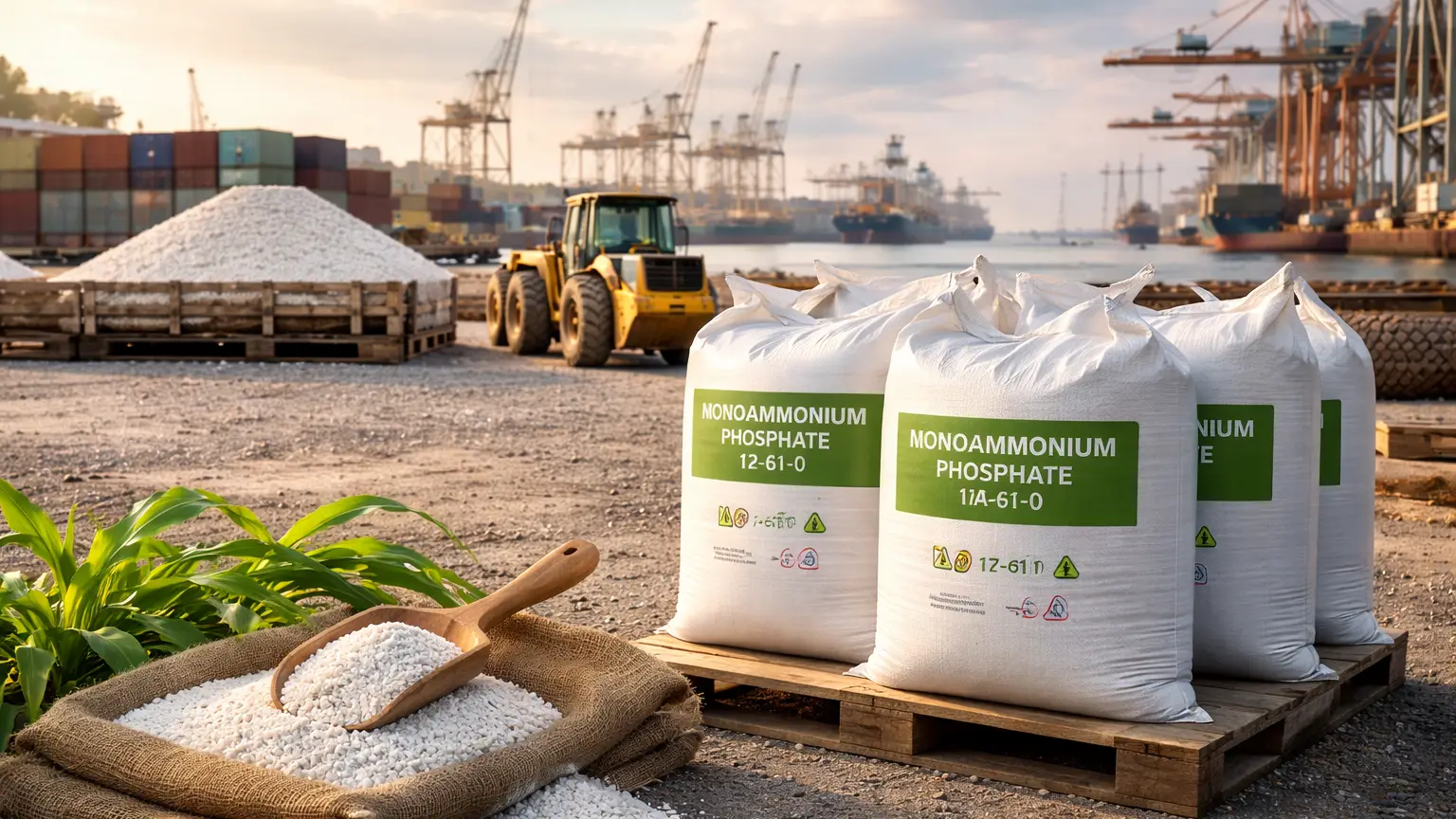
Monoammonium Phosphate (MAP), with its chemical formula NH₄H₂PO₄, is a cornerstone of modern intensive agriculture. It is a highly concentrated, water-soluble source of two primary macronutrients: phosphorus (P) and nitrogen (N), typically in a ratio of about 52% P₂O₅ and 11% N. This high analysis and excellent physical properties make it one of the most efficient and widely used phosphate fertilizers globally. Its role is particularly critical in the early growth stages of crops, promoting robust root development, stem strength, and flowering—factors directly linked to final yield and quality.
The production of MAP is a capital-intensive process primarily tied to the mining of phosphate rock, a finite and geographically concentrated resource. Major reserves are held by a handful of countries, including Morocco, China, the United States, and Russia. The manufacturing process involves reacting ammonia with phosphoric acid, linking its cost and availability directly to the volatile natural gas market (for ammonia) and geopolitical control over phosphate rock. This inherent supply chain vulnerability is what magnifies the impact of geopolitical tremors. Compared to other phosphorus fertilizers like Diammonium Phosphate (DAP), MAP has a lower pH and is often preferred for soils with higher alkalinity or for direct application in planting rows, giving it specific, irreplaceable applications in many cropping systems.
The forecasted price shock for Monoammonium Phosphate is not the result of a single factor but a convergence of multiple, reinforcing trends. Firstly, structural supply constraints are emerging. Depletion of high-grade phosphate rock in some traditional basins is increasing production costs and energy consumption. Simultaneously, environmental regulations in key producing regions are tightening, mandating more sustainable mining and processing practices, which adds capital and operational expenses that are ultimately passed through the market. These long-term pressures create a baseline of elevated cost.
On the demand side, the fundamental driver remains a growing global population requiring increased food production. However, this is compounded by strategic stockpiling behaviors. Nations, wary of potential export bans from dominant suppliers, are building strategic reserves of critical fertilizers, effectively removing significant volumes from the traded market. This government-led hoarding, akin to actions seen in grain markets, creates artificial scarcity and drives spot prices higher. Furthermore, the post-pandemic recovery in industrial demand for phosphates (e.g., in lithium iron phosphate batteries for EVs) adds a new, competing sectoral demand that did not exist at scale a decade ago, pulling raw material away from fertilizer production.
Geopolitics is the primary catalyst transforming these market pressures into a severe price shock. The most significant flashpoint remains the control over the world's largest phosphate rock reserve in Western Sahara, contested between Morocco and the Polisario Front. Any escalation or legal challenge to Morocco's exports can instantly jeopardize a massive portion of global supply. Concurrently, China's continued dominance as a producer and its increasing tendency to prioritize domestic food security through export quotas or outright bans create unpredictable shortages in the international market, as witnessed in 2021-2022.
In Eastern Europe, the ongoing conflict has permanently altered trade patterns. While Russian and Belarusian fertilizer exports are not under direct sanctions, banking, insurance, and shipping restrictions have created a "shadow fleet" trade, adding complexity, cost, and risk premiums. Traditional trade routes through the Black Sea are unstable, forcing reroutings that increase freight costs and transit times. Additionally, strategic partnerships are shifting; nations are forming new bilateral fertilizer trade agreements to bypass traditional market hubs, leading to a balkanization of the global market where price discovery becomes more opaque and regionally disparate.
The direct consequence of a Monoammonium Phosphate price shock will be a sharp increase in the cost of production for farmers worldwide. This will inevitably lead to difficult choices: absorbing lower margins, passing costs to consumers (fueling food inflation), or reducing application rates, which risks lower yields and long-term soil fertility depletion. The burden will fall disproportionately on developing, import-dependent nations in regions like South Asia, Southeast Asia, and Latin America, potentially exacerbating food insecurity and social instability.
At a macro level, the shock will accelerate trends toward agricultural protectionism. Countries may further restrict exports of food crops grown with now-expensive imported fertilizer, creating a vicious cycle of protectionism. It will also force a reevaluation of national agricultural policies, likely spurring increased investment in domestic phosphate production or recycling (e.g., struvite recovery from wastewater) in some nations, though these are long-term solutions. In the immediate term, the volatility will benefit traders and intermediaries with the logistical agility and market intelligence to navigate disrupted flows, highlighting the value of platforms that provide real-time insights and connections.
For importers, distributors, and large-scale farming operations, proactive risk management is essential to weather the 2026 volatility. The cornerstone strategy must be supply chain diversification. Relying on a single source or region for MAP fertilizer is now a high-risk proposition. Buyers should actively qualify suppliers from alternative, politically stable regions, even if at a slight cost premium, to build resilience. This is where comprehensive B2B platforms become invaluable, offering visibility into a global network of verified suppliers beyond traditional channels.
Financial and contractual strategies must also evolve. Forward contracting with trusted partners, while more complex, can lock in supply and hedge against spot price explosions. Investing in on-site storage capacity allows for strategic purchasing during price dips. Most critically, buyers must enhance their market intelligence capabilities. Subscribing to specialized market analysis, tracking geopolitical developments, and utilizing digital tools for logistics and supplier verification are no longer ancillary activities but core business functions. Informed decision-making, powered by accurate data on availability, price trends, and logistics, will separate the resilient from the vulnerable in the coming market upheaval.
The projected Monoammonium Phosphate price shock in 2026 represents a paradigm shift for the global fertilizer industry. It is a clear signal that the era of predictable, low-cost inputs underpinning the Green Revolution is over, replaced by an era where fertilizer trade is inextricably linked to great power competition, resource nationalism, and supply chain weaponization. Success in this new environment demands a move from passive procurement to active supply chain strategy, emphasizing diversification, intelligence, and partnerships.
While challenges are significant, they also present opportunities for innovation in sourcing, efficiency, and nutrient stewardship. By understanding the deep geopolitical currents reshaping the market for phosphorus fertilizers like MAP, stakeholders can make informed decisions to secure their operations and contribute to a more stable food system. The role of transparent, global marketplaces and information hubs will be crucial in facilitating this transition, connecting reliable supply with urgent demand in a fractured world.
Disclaimer: This article is for informational and market insight purposes only. It is not intended as technical, safety, financial, or professional advice of any kind. The forecasts and analyses presented are based on current trends and are subject to change due to unpredictable market and geopolitical forces. Readers are strongly advised to verify all information independently, consult with qualified agronomists, financial advisors, and legal experts for specific applications, and always refer to official product documentation, including Material Safety Data Sheets (MSDS/SDS), for safety and handling guidelines. For specific procurement or application inquiries regarding Monoammonium Phosphate, please contact our professional team directly.
We're committed to your privacy. Tradeasia uses the information you provide to us to contact you about our relevant content, products, and services. For more information, check out our privacy policy.


 English
 Indonesian
 简体字
简体字
 العربية
 Español
 Français
 Português
 日本語
日本語
 한국어
한국어
 Tiếng Việt




















