Explore our network of country and industry based websites to access localized information, product offerings, and business services across our group.
Log in to start sending quotation requests for any product.
Don't have an account? Sign Up Here
Home Indonesia's 2026 Rock Phosphate Imports for NPK Fertilizer
Trade Insights | Applications and Buyers | 10 April 2026
Introduction
The Critical Role of Rock Phosphate in Modern NPK Formulations
Indonesia's Fertilizer Sector: A Strategic Overview
Analyzing Indonesia's Rock Phosphate Import Trends: The 2026 Outlook
Key Specifications and Sourcing Quality Rock Phosphate
Challenges and Strategic Considerations for Importers
Conclusion
The global agricultural landscape is underpinned by the consistent and strategic supply of essential nutrients. For a major agricultural and emerging economic powerhouse like Indonesia, securing the raw materials for fertilizer production is a matter of national food security and economic stability. As the nation looks towards 2026, the import dynamics of rock phosphate—the fundamental source of phosphorus for NPK fertilizer production—are poised for significant evolution. This article provides a comprehensive analysis of Indonesia's projected import trends for rock phosphate, examining the market drivers, challenges, and strategic implications for the fertilizer industry.
Indonesia's position as a key producer of palm oil, rubber, rice, and other cash crops creates an immense, sustained demand for complex fertilizers. Domestic production of NPK blends is crucial to meeting this demand cost-effectively. However, Indonesia possesses limited high-grade phosphate rock reserves, making it heavily reliant on imports to feed its fertilizer plants. Understanding the flow of this critical commodity, sourced through platforms like Chemtradeasia.com and its regional portals, is essential for stakeholders across the agricultural value chain, from traders and manufacturers to policymakers and end-users.
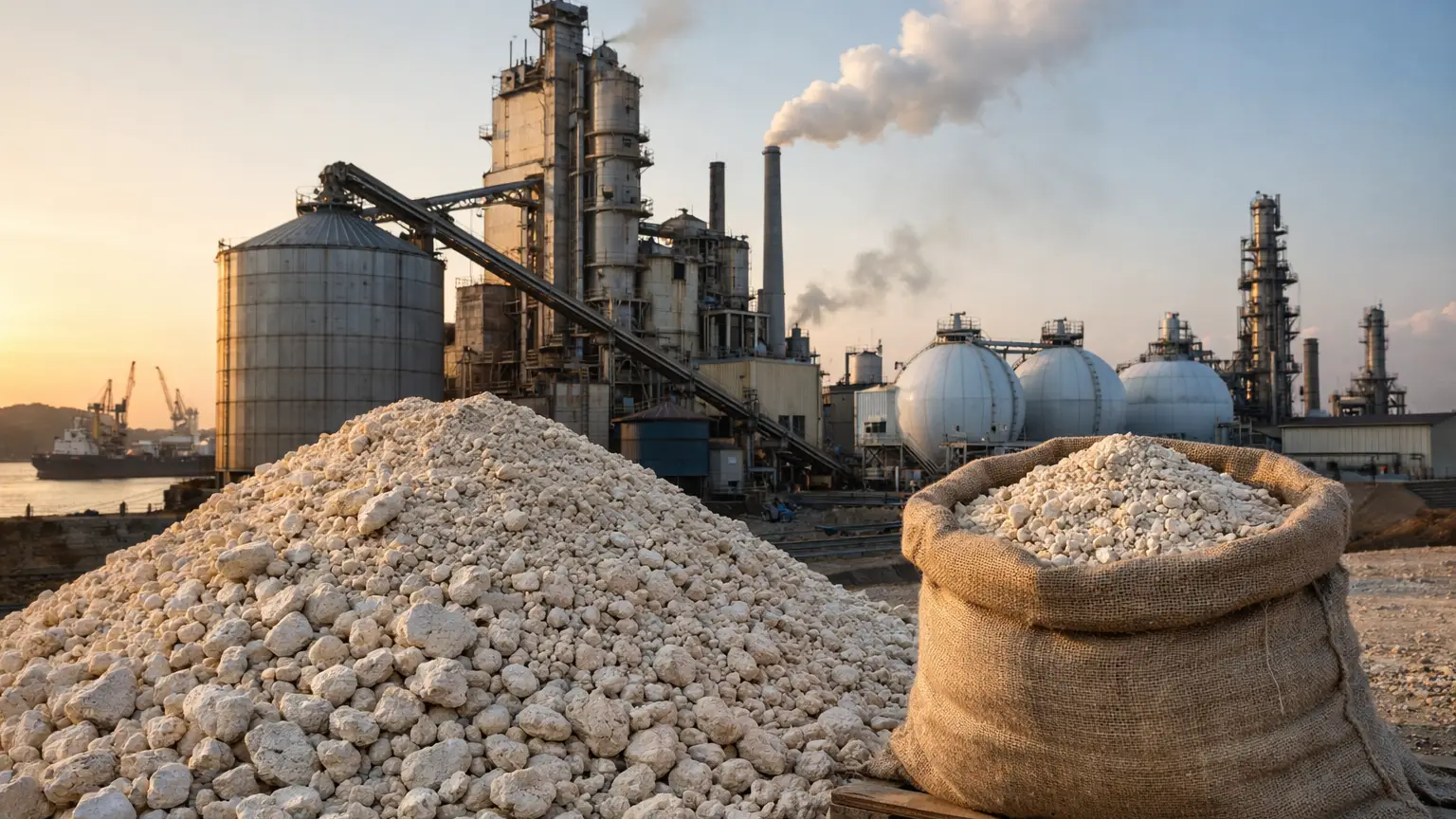
Rock phosphate is the unprocessed ore containing calcium phosphate minerals, primarily apatite. It is the primary global source of phosphorus (P), one of the three macronutrients denoted in the N-P-K labeling of fertilizers. In NPK fertilizer production, processed rock phosphate provides the soluble phosphate component that is blended with nitrogen (from sources like urea or ammonium) and potassium (from potash) to create tailored nutrient formulas. Without a secure and cost-effective supply of phosphate rock, the production of these essential balanced fertilizers would be severely constrained, impacting crop yields nationwide.
The processing of rock phosphate for use in water-soluble fertilizers typically involves treatment with sulfuric acid to produce phosphoric acid, which is then used to manufacture various phosphate salts like Diammonium Phosphate (DAP), Monoammonium Phosphate (MAP), or Triple Superphosphate (TSP). These intermediates are then expertly formulated into granular or powdered NPK blends. The quality of the final fertilizer is intrinsically linked to the chemical and physical specifications of the sourced rock phosphate, making procurement a highly technical and strategic function.
Indonesia's fertilizer industry is dominated by state-owned enterprises like PT Pupuk Indonesia, which operates several large-scale NPK and urea plants across the archipelago. These facilities are strategically located near agricultural hubs and ports to optimize logistics. The government's continued focus on agricultural self-sufficiency and export crop expansion places consistent upward pressure on domestic fertilizer demand. This creates a predictable and growing market for raw material imports, with rock phosphate being a top priority.
Furthermore, government subsidy programs for fertilizers ensure affordability for smallholder farmers, which stabilizes demand but also places emphasis on cost-efficient sourcing of inputs. The industry's scale means that even minor fluctuations in the price or availability of imported rock phosphate can have significant ripple effects on national fertilizer costs and, consequently, farm economics. This underscores why monitoring import trends and establishing resilient supply chains, potentially facilitated by specialized B2B platforms like Fertradeasia.com, is of paramount importance.
Projecting towards 2026, Indonesia's import volume of rock phosphate is expected to see a steady compound annual growth rate (CAGR) of 3-5%, driven by both replacement demand for existing NPK plants and potential capacity expansions. The primary suppliers will likely remain countries with vast phosphate rock reserves and established trade relationships. Key sources include Morocco (and Western Sahara), Jordan, Peru, and Vietnam. Geopolitical stability in these regions, freight costs, and trade policies will be critical factors influencing price and supply reliability.
A notable trend is the increasing scrutiny on the quality and environmental footprint of imported materials. Indonesian manufacturers, under pressure from both domestic regulations and global market expectations, may increasingly favor suppliers who can provide consistent, high-grade ore (with higher P2O5 content) and demonstrate responsible mining practices. This could shift some import volumes away from traditional sources with lower-grade ore towards premium suppliers, even at a higher cost per tonne, to improve processing efficiency and final product quality.
For NPK producers, not all rock phosphate is equal. Key specifications dictate its suitability and economic value. The most critical parameter is the Phosphate Content, expressed as % P2O5 (phosphorus pentoxide). High-grade ore typically ranges from 30% to 38% P2O5. Higher content means less inert material to transport and process, improving efficiency. The Chemical Composition is also vital; high levels of impurities like cadmium, arsenic, or excessive silica and carbonates can complicate the acidulation process, increase acid consumption, and affect the quality of the resulting phosphoric acid.
Physical properties such as grindability and moisture content impact handling and processing costs. Sourcing the right specification requires expertise and reliable partners. This is where integrated B2B platforms like Chemtradeasia.co.id (for the Indonesian market) and its sister sites Chemtradeasia.sg and Chemtradeasia.ae provide significant value. They connect buyers with a vetted network of global suppliers, offering detailed product specifications, facilitating quality verification, and streamlining the logistics of bulk chemical procurement, thereby de-risking the import process for Indonesian fertilizer companies.
Furthermore, these platforms often provide access to various processed phosphate intermediates like DAP or MAP, offering procurement flexibility. A manufacturer might blend direct imports of rock phosphate for their own acid plant with purchases of ready-made phosphate salts to manage production schedules and buffer against supply chain disruptions, all through a single trusted channel.
The path to securing rock phosphate for 2026 is not without obstacles. Price Volatility remains a primary concern, influenced by global energy costs (affecting mining and shipping), geopolitical tensions in key producing regions, and currency exchange rate fluctuations. Indonesian importers must develop sophisticated hedging and procurement strategies to manage budget uncertainty. Logistical Complexities are another hurdle. Importing bulk minerals requires reliable port infrastructure, efficient customs clearance, and robust inland transportation to fertilizer plants, any bottleneck in which can cause production delays.
Strategic responses to these challenges include supply chain diversification to avoid over-reliance on a single country, fostering long-term contracts with key suppliers to ensure volume and price stability, and investing in strategic stockpiles. Leveraging digital procurement tools offered by platforms like Chemtradeasia.in or Chemtradeasia.com can enhance market visibility, enable competitive bidding, and facilitate smoother international transactions. Proactive engagement with such resources will be a differentiator for successful importers in the coming years.
Indonesia's journey towards agricultural resilience and economic growth is inextricably linked to its ability to secure fundamental inputs like rock phosphate. The import trends leading into 2026 point towards a market characterized by growing volumes, an emphasis on quality and sustainability, and persistent logistical and price challenges. For NPK fertilizer producers, navigating this landscape will require a blend of market intelligence, strategic partnerships, and agile procurement practices.
Success will depend on connecting with reliable global suppliers who can meet stringent specifications and ensure supply chain continuity. Professional B2B marketplaces that specialize in chemical and fertilizer raw materials, such as the Chemtradeasia network and Fertradeasia, serve as critical enablers in this complex trade ecosystem, providing the platform, expertise, and connections necessary for efficient and secure sourcing.
Disclaimer: This article is for informational and market insight purposes only. It is not intended as technical, safety, or professional advice for fertilizer production or chemical handling. The data and trends discussed are based on analysis and projections which are subject to change. Readers are strongly advised to verify all information independently with qualified experts, consult official technical documentation and safety data sheets (SDS/MSDS) for any products, and contact our professional team for specific application guidance and current product specifications.
We're committed to your privacy. Tradeasia uses the information you provide to us to contact you about our relevant content, products, and services. For more information, check out our privacy policy.


 English
 Indonesian
 简体字
简体字
 العربية
 Español
 Français
 Português
 日本語
日本語
 한국어
한국어
 Tiếng Việt




















