Explore our network of country and industry based websites to access localized information, product offerings, and business services across our group.
Log in to start sending quotation requests for any product.
Don't have an account? Sign Up Here
Home Potassium Sulphate: Powering Asia's Horticulture Future
Trade Insights | Applications and Buyers | 10 April 2026
Introduction
The Science of SOP: Why It's Superior for Sensitive Crops
Fertigation Revolution: SOP as the Ideal Solution
Asia's Horticulture Boom: A 2026 Market Outlook
Sourcing Premium SOP: The Chemtradeasia Advantage
Conclusion
The agricultural landscape of Asia is undergoing a profound transformation. Driven by population growth, urbanization, and rising incomes, the demand for high-value horticultural produce—fruits, vegetables, nuts, and flowers—is skyrocketing. To meet this demand sustainably and profitably, farmers are rapidly adopting precision agriculture techniques, with fertigation at the forefront. At the heart of this revolution lies a specific nutrient source: Potassium Sulphate (SOP, K₂SO₄). As we look towards 2026, the strategic use of SOP in fertigation and horticulture is not just an agronomic practice but a critical business imperative for Asian growers.
Unlike conventional bulk fertilizers, Potassium Sulphate offers a chloride-free, highly soluble form of potassium and sulphur, two macronutrients essential for plant quality, yield, and stress resistance. This makes it uniquely suited for the sensitive, high-investment crops that define modern horticulture. This article delves into the scientific rationale behind SOP's superiority, its perfect synergy with fertigation systems, the burgeoning market dynamics in Asia, and how platforms like Chemtradeasia and Fertradeasia are pivotal in connecting growers with reliable, high-quality SOP supplies to power the region's green future.
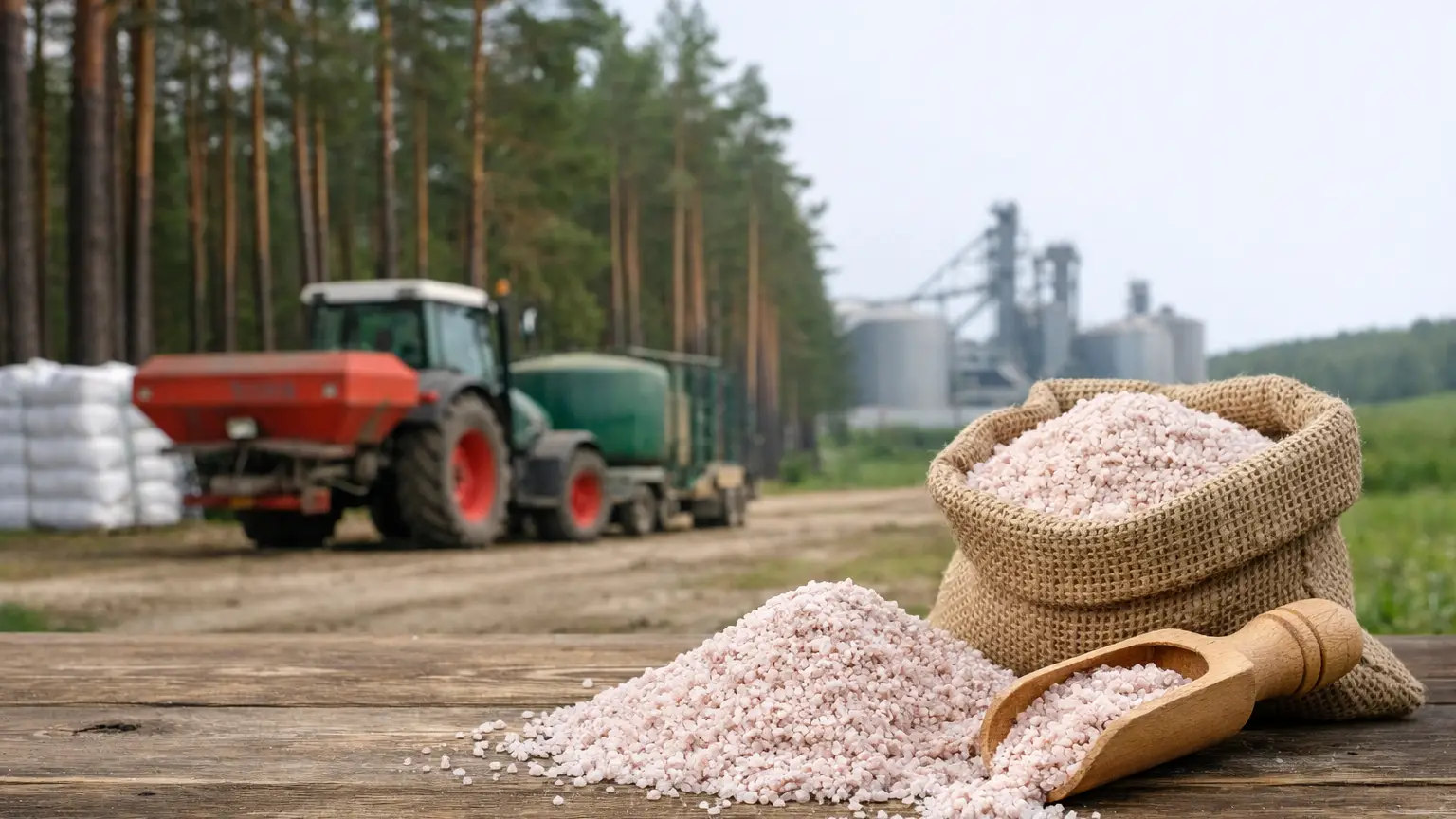
Potassium Sulphate is a premium fertilizer distinguished by its chemical composition: 50% K₂O (potassium oxide) and 18% S (sulphur) in the readily available sulphate form. This combination is fundamentally different from the more common Muriate of Potash (MOP, KCl), which contains chloride. Chloride ions can be toxic to many fruit, vegetable, and tuber crops, leading to issues like reduced brix (sugar content), impaired flavor, and increased susceptibility to diseases. SOP's chloride-free nature eliminates this risk, making it the potassium source of choice for quality-focused horticulture.
The benefits of the potassium and sulphur in SOP are synergistic. Potassium is a key regulator of osmotic pressure, enzyme activation, and sugar transport—directly influencing fruit size, color, shelf life, and overall yield. Sulphur, often called the "fourth major nutrient," is a vital component of amino acids (cysteine and methionine), proteins, vitamins, and chlorophyll. It is crucial for nitrogen efficiency, oil synthesis in oilseeds, and the development of flavor compounds in alliums and brassicas. The sulphate form in SOP is immediately plant-available, ensuring rapid uptake and correction of deficiencies, which is vital in fast-growing horticultural cycles.
For crops like tomatoes, potatoes, tobacco, citrus, pineapples, berries, and greenhouse vegetables, the use of SOP fertilizer translates to tangible economic returns. Studies consistently show improvements in marketable yield, enhanced fruit coloring and uniformity, better post-harvest handling characteristics, and overall improved crop health. In the competitive Asian horticulture market, where premium quality commands higher prices, this investment in the right nutrient form is non-negotiable.
Fertigation—the application of fertilizers through irrigation systems—is revolutionizing Asian agriculture by delivering unparalleled efficiency, water savings, and nutrient precision. This method is perfectly aligned with the physical and chemical properties of Potassium Sulphate. SOP boasts high solubility (approximately 120 g/L at 20°C), allowing it to dissolve completely in fertigation tanks without clogging sensitive drip emitters or micro-sprinklers. Its low salt index compared to other potassium sources reduces the risk of root burn and soil salinity buildup, a common concern in intensive protected cultivation.
The integration of SOP into fertigation programs allows for "spoon-feeding" nutrients according to the crop's precise phenological stages. For instance, during fruit bulbing or tuber initiation, potassium demand peaks. Fertigation with SOP enables growers to meet this surge in demand instantly, directly to the root zone, maximizing nutrient use efficiency (NUE) and minimizing losses to leaching. This precision is critical in controlled environment agriculture (CEA), hydroponics, and substrate-based growing, which are expanding rapidly across Asia in urban and peri-urban areas.
Furthermore, the compatibility of SOP with other common fertigation inputs like calcium nitrate and magnesium sulphate is generally excellent, preventing undesirable precipitates that can damage irrigation infrastructure. This makes formulating balanced nutrient solutions straightforward. As water scarcity becomes a more pressing issue, the water-nutrient synergy offered by SOP-based fertigation represents a sustainable path forward, enabling higher yields per drop of water and per unit of land—a cornerstone of Asia's future food security.
The trajectory for horticulture in Asia points to sustained, robust growth leading into 2026. Countries like India, China, Vietnam, Indonesia, Thailand, and the Philippines are not only major producers but also rapidly growing consumers of high-value produce. Government initiatives promoting protected cultivation, export-oriented agriculture, and food security are driving investment in advanced farming technologies. The ASEAN Economic Community (AEC) is further facilitating intra-regional trade in fresh produce, raising quality standards and competition.
Market analysts project that the demand for specialty fertilizers like Potassium Sulphate will outpace that of conventional fertilizers in the region. This is driven by the crop shift towards fruits and vegetables, the expansion of greenhouse and net-house areas, and the increasing professionalization of farm management. By 2026, we anticipate a significant consolidation in the supply chain, with a greater emphasis on traceability, consistent quality, and technical support for growers. The ability to source SOP that meets strict purity and solubility specifications will be a key differentiator for successful farming enterprises.
Regional trends also indicate a growing awareness of sustainable and climate-resilient farming. SOP contributes to this by improving plant resilience against drought, frost, and pest pressure due to its role in strengthening cell walls and regulating stomatal function. This "plant health insurance" aspect will become increasingly valuable as climate variability impacts agricultural outputs. The Asian SOP market will thus evolve from being purely transactional to being value- and solution-oriented, with suppliers expected to provide agronomic intelligence alongside the product.
In a complex and fragmented global fertilizer market, sourcing high-quality Potassium Sulphate reliably and efficiently is a challenge for many Asian importers, distributors, and large-scale farms. This is where B2B digital marketplaces and specialized trading platforms provide a critical advantage. Chemtradeasia.com and its regional portals (like Chemtradeasia.in for India, Chemtradeasia.co.id for Indonesia, and Chemtradeasia.ae for the Middle East) serve as vital hubs connecting buyers with vetted global suppliers of SOP and other essential agrochemicals.
The Chemtradeasia platform streamlines the procurement process by offering transparency in pricing, detailed product specifications (including granular and soluble grades suitable for fertigation), and verified supplier credentials. For buyers focused specifically on fertilizers, Fertradeasia.com offers a targeted environment. This digital approach reduces transactional friction, mitigates risk, and provides access to a wider range of quality options than traditional channels. Key specifications buyers should verify include K₂O content (minimum 50%), chloride content (typically below 1-2%), solubility, and particle size, depending on whether the SOP is destined for direct soil application, blending, or fertigation solutions.
Beyond mere transaction facilitation, these platforms are becoming repositories of market intelligence. They offer insights into logistics, regional demand fluctuations, and new product developments, empowering buyers to make informed, strategic purchasing decisions. For a grower or importer planning their 2026 fertigation program, establishing a relationship with a reliable sourcing partner on such a platform is a strategic step to ensure consistent access to premium-grade SOP, securing both their input supply chain and final crop quality.
As Asia marches towards 2026, the convergence of horticultural demand, precision farming adoption, and sustainability goals creates an undeniable imperative for the use of Potassium Sulphate. Its chloride-free composition, combined with high solubility and the dual benefit of potassium and sulphur, makes it the cornerstone nutrient for high-value, quality-sensitive crop production. When delivered through modern fertigation systems, SOP unlocks unprecedented levels of efficiency, yield, and crop resilience. The growth of digital B2B platforms like Chemtradeasia and Fertradeasia is democratizing access to this vital input, ensuring that growers across the continent can participate in and benefit from the horticulture boom.
Disclaimer: This article is for informational and market insight purposes only. It is not intended as technical, safety, or professional agronomic advice. The information presented regarding product applications, trends, and specifications should be verified independently. For specific applications, always consult with qualified agronomists, refer to official product documentation and Safety Data Sheets (SDS), and contact our team or product suppliers for precise, situation-specific guidance.
We're committed to your privacy. Tradeasia uses the information you provide to us to contact you about our relevant content, products, and services. For more information, check out our privacy policy.


 English
 Indonesian
 简体字
简体字
 العربية
 Español
 Français
 Português
 日本語
日本語
 한국어
한국어
 Tiếng Việt