Explore our network of country and industry based websites to access localized information, product offerings, and business services across our group.
Log in to start sending quotation requests for any product.
Don't have an account? Sign Up Here
Home Asia's Potassium Chloride & NPK Fertilizer Outlook to 2026
Trade Insights | Applications and Buyers | 10 April 2026
Introduction
The Central Role of Potassium Chloride in Modern Asian Agriculture
Asia's Potassium Chloride & NPK Fertilizer Market: Key Drivers for 2026
Spotlight on Premium Potassium Chloride Products & Specifications
Strategic Sourcing and Supply Chain Considerations
Conclusion
The agricultural landscape of Asia is undergoing a profound transformation, driven by the dual imperatives of food security for its massive population and the sustainable intensification of farming practices. At the heart of this transformation lies the critical need for balanced plant nutrition, where Potassium Chloride (KCl), commonly known as Muriate of Potash (MOP), plays an indispensable role. As the primary source of potassium in NPK fertilizers, KCl is fundamental to enhancing crop yield, quality, and resilience. Looking ahead to 2026, the market for these essential agricultural inputs in Asia is poised for significant evolution, influenced by geopolitical shifts, technological adoption, and changing environmental policies.
This article provides a comprehensive analysis of the projected trends for Potassium Chloride within the NPK fertilizer sector across Asia. We will delve into the macroeconomic and agronomic drivers shaping demand, examine regional consumption patterns, and highlight the strategic importance of reliable sourcing from established distributors. Furthermore, we will detail the specifications and benefits of premium-grade Potassium Chloride products, offering stakeholders actionable insights to navigate the coming years successfully.
Potassium, the "K" in NPK, is not a building block of plant tissues like nitrogen but acts as a crucial regulator of physiological processes. Potassium Chloride is the most widely used source of this nutrient due to its high potassium content (typically 60-62% K2O), cost-effectiveness, and excellent solubility. In the diverse agro-climatic zones of Asia, from the rice paddies of Southeast Asia to the wheat fields of South Asia and the fruit orchards of East Asia, potassium is vital for activating enzymes, regulating stomatal opening for water use efficiency, and improving disease resistance. The application of Potassium Chloride directly or within compound NPK fertilizers directly translates to stronger stalks, improved grain filling, and enhanced overall crop quality.
The integration of Potassium Chloride into blended or complex NPK fertilizers allows for precise nutrient management tailored to specific crops and soil conditions. This practice is becoming increasingly sophisticated as Asian farmers move beyond traditional practices towards precision agriculture. The demand for customized NPK formulations, where the potassium component is reliably supplied by high-purity Potassium Chloride, is a key market trend. This shift underscores the move from viewing fertilizer as a generic commodity to a specialized agricultural input, where product quality and consistency from suppliers become paramount.
Several powerful forces are converging to define the Potassium Chloride and NPK fertilizer market trajectory in Asia leading up to 2026. Firstly, population growth and dietary shifts towards higher-value crops (fruits, vegetables) continue to exert upward pressure on agricultural productivity, directly increasing demand for potash. Secondly, government policies across nations like India, China, and Indonesia are actively promoting balanced fertilizer use to correct widespread soil nutrient deficiencies, often through subsidy programs that increasingly favor complex NPKs over straight urea, benefiting the Potassium Chloride market.
Geopolitical factors and supply chain diversification are equally critical drivers. Historical reliance on a limited number of major potash-exporting regions has prompted Asian importers and governments to seek more resilient supply chains. This is fostering opportunities for new trade corridors and strengthening the role of regional distribution hubs and expert intermediaries who can ensure a steady flow of material. Furthermore, the growing emphasis on sustainable farming and carbon footprint reduction is encouraging research into enhanced-efficiency fertilizers and optimal application rates, influencing the specifications and value proposition of the Potassium Chloride used in premium NPK blends.
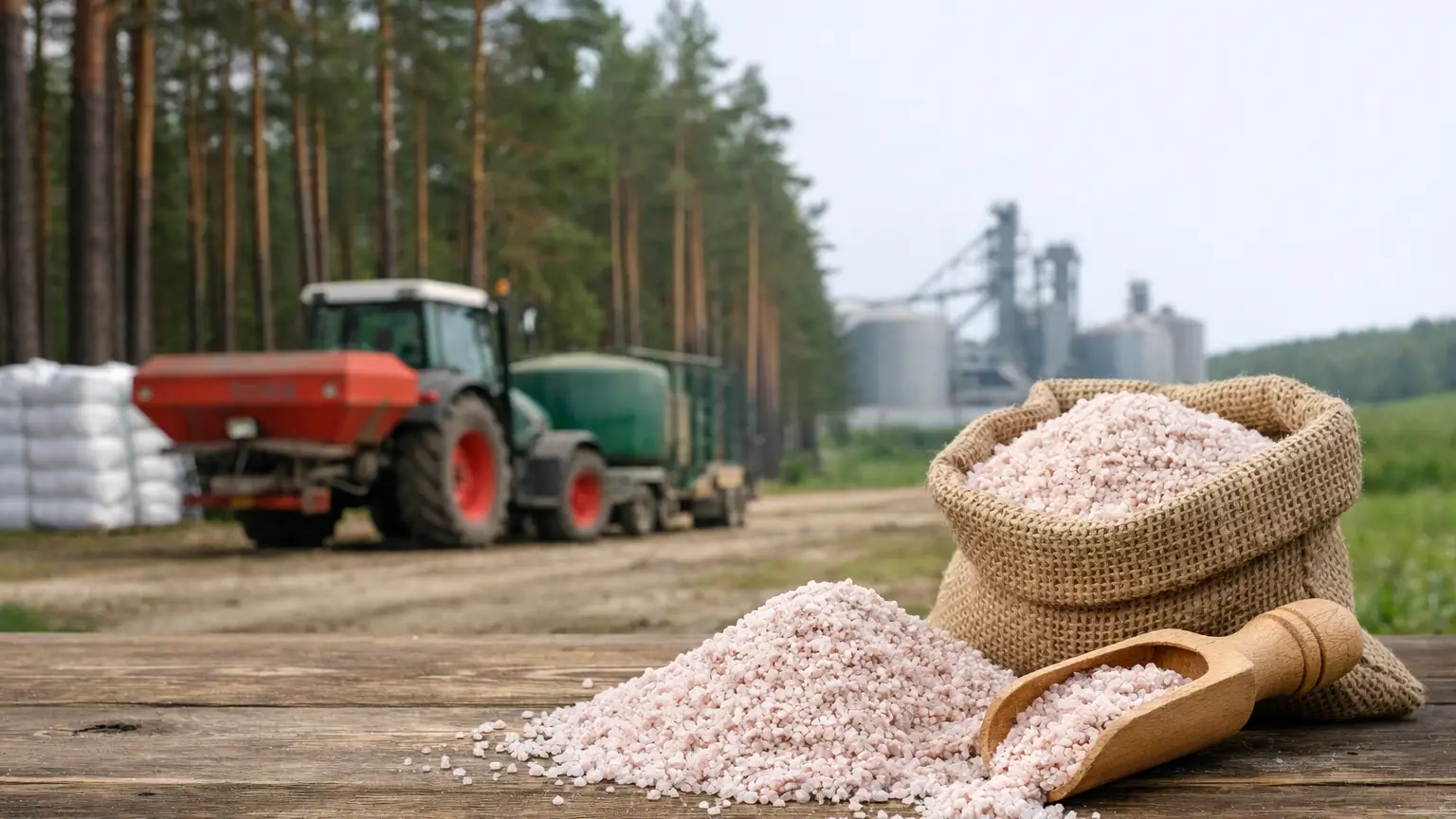
Not all Potassium Chloride is created equal, and discerning buyers in Asia's competitive agricultural sector are increasingly focused on product specifications that guarantee performance. Premium-grade Potassium Chloride, such as the standard and granular varieties supplied by leading distributors, is characterized by its high assay (minimum 60% K2O), low moisture content, and optimal particle size distribution. Granular MOP, for instance, is specifically engineered for bulk blending with other granular nutrients like DAP and urea to produce homogeneous NPK fertilizers with minimal segregation, a critical factor for uniform crop growth.
The physical and chemical quality of Potassium Chloride directly impacts the manufacturing process and efficacy of compound NPK fertilizers. High-purity material with low levels of impurities (like sodium chloride) ensures compatibility with other raw materials and prevents caking during storage and transportation. For direct application, especially in chloride-sensitive crops, reduced-chloride or sulfate-based potash alternatives are considered, but standard Potassium Chloride remains the workhorse for most broadacre and plantation crops due to its economic and agronomic efficiency. Reliable suppliers provide consistent quality, backed by certificates of analysis, which is non-negotiable for large-scale fertilizer blenders and agro-industrial companies.
As market volatility remains a constant, strategic sourcing of Potassium Chloride becomes a competitive advantage for NPK fertilizer manufacturers and large agricultural cooperatives in Asia. Partnering with established, multi-regional distributors and sourcing platforms like those under the chemtradeasia and fertradeasia.com network offers significant benefits. These entities provide not just product, but vital market intelligence, logistical expertise, and quality assurance, navigating the complexities of international trade, tariffs, and documentation on behalf of their clients.
The establishment of regional hubs, such as those indicated by domains like chemtradeasia.sg (Singapore), chemtradeasia.co.id (Indonesia), and chemtradeasia.ae (UAE), reflects a supply chain model built for resilience. These hubs facilitate timely delivery, reduce shipping costs, and provide local technical support. For buyers, this means access to a steady supply of Potassium Chloride without being exposed to the full brunt of spot market fluctuations. The trend towards 2026 is clearly one of building long-term, strategic partnerships with suppliers who have a proven track record, deep regional knowledge, and the capability to deliver both standard and tailored solutions for the Asian NPK fertilizer industry.
The outlook for Potassium Chloride in Asia's NPK fertilizer market up to 2026 is one of robust demand underpinned by fundamental agricultural needs and sophisticated by evolving farming practices. Success in this market will hinge on understanding regional demand nuances, embracing precision nutrient management, and, most importantly, securing a reliable supply of high-quality raw materials. Companies that leverage strategic partnerships with expert distributors will be best positioned to mitigate supply chain risks, access premium products, and ultimately contribute to enhancing agricultural productivity across the continent.
Disclaimer: This article is for informational and market insight purposes only. It is not intended as technical, safety, or professional advice for the handling, application, or formulation of fertilizers. The data and trends presented are based on market analysis and should be independently verified. We strongly advise all readers to consult directly with agronomists, review official product documentation including Safety Data Sheets (SDS/MSDS), and contact our technical team for specific application guidance, product specifications, and safety protocols before making any procurement or operational decisions.
We're committed to your privacy. Tradeasia uses the information you provide to us to contact you about our relevant content, products, and services. For more information, check out our privacy policy.


 English
 Indonesian
 简体字
简体字
 العربية
 Español
 Français
 Português
 日本語
日本語
 한국어
한국어
 Tiếng Việt




















