
Applications and Buyers|01 January 2026
Diammonium Phosphate (DAP) Fertilizer: Industrial Functions, Production Process, and Operational Value
Introduction
Diammonium phosphate (DAP) , with the chemical formula (NH4)2HPO4, is one of the most widely used nitrogen–phosphorus fertilizers in industrial agriculture. Containing 18% nitrogen and 46% P2O5, it delivers concentrated nutrients that support crop growth while improving application efficiency. Fertilizer producers and procurement teams rely on DAP for its stable quality, ease of handling, and strong performance across a wide range of crops. This article reviews DAP’s chemical role, manufacturing integration, application stages, sector differences, and operational benefits.
Core Chemical Functions
DAP supplies two essential macronutrients in a single product. Ammonium nitrogen supports leaf development and chlorophyll formation, while phosphorus promotes root growth, early plant strength, and energy transfer. When dissolved, DAP shows a mildly alkaline reaction with a pH close to 8, which helps improve phosphorus availability in acidic soils common across many Asia-Pacific farming regions. In fertilizer blends, DAP provides highly water-soluble phosphorus that is less prone to fixation than older phosphate sources such as single superphosphate. Its high nutrient concentration allows manufacturers to reduce application volumes while maintaining crop response, making it suitable for basal fertilization and starter use. Unlike specialty chemicals, DAP is designed purely for nutrient delivery. Its balanced nitrogen-to-phosphorus ratio supports early plant development without the need for additional soil conditioners in most standard applications.
Production Processes
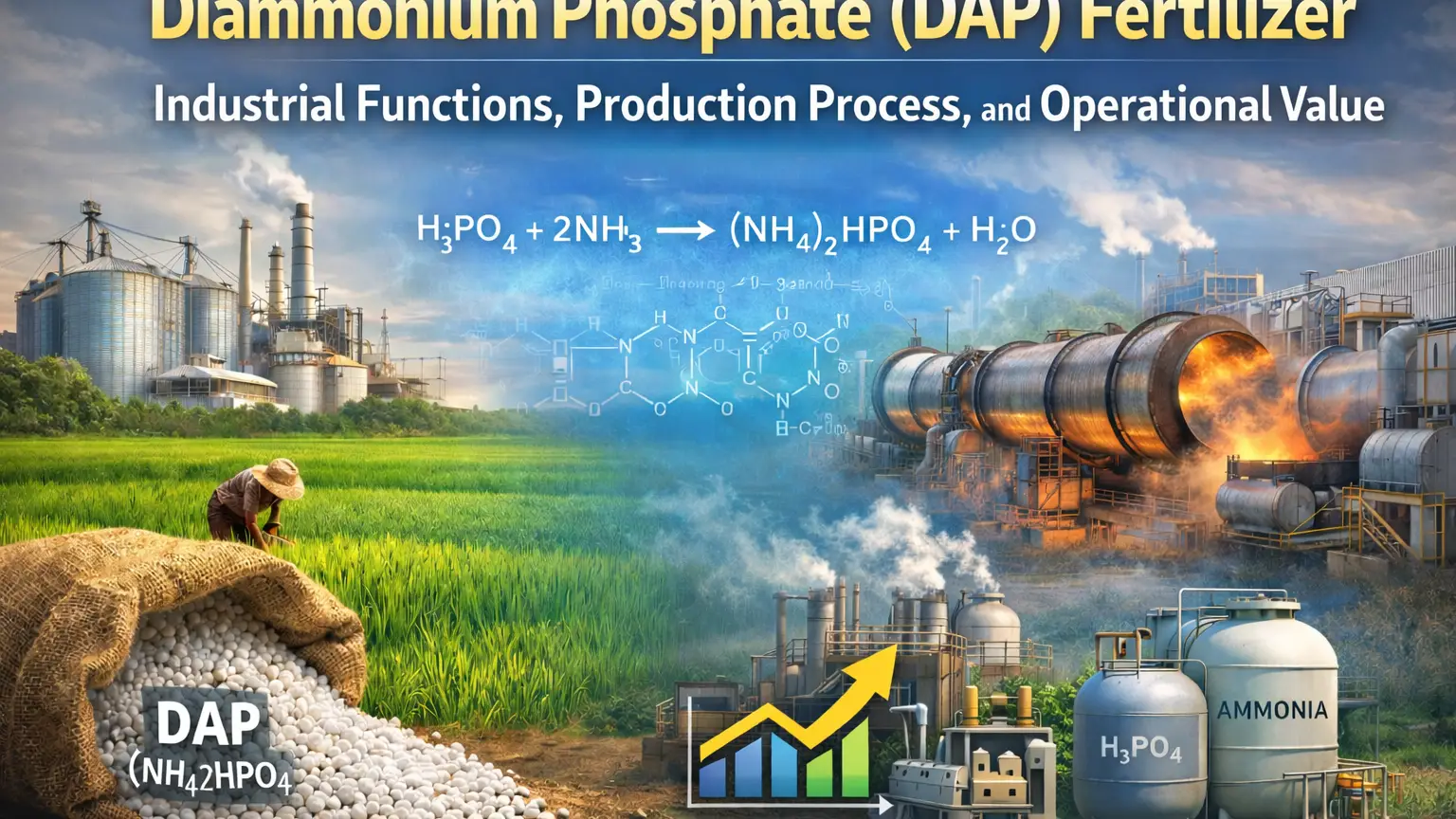
DAP is produced by reacting phosphoric acid with ammonia in controlled neutralization systems. The reaction generates heat and forms a slurry containing ammonium phosphates, which is then sent to granulation units. Granules are shaped, dried at moderate temperatures, cooled for stability, screened to uniform size, and coated to prevent moisture absorption and caking during storage. Modern fertilizer plants use pipe reactor and continuous granulation systems to improve efficiency. These setups recycle fine particles, reduce energy use through heat recovery, and achieve granulation rates above 90%. Asia-Pacific producers often integrate wet-process phosphoric acid to manage impurities such as iron and aluminum, ensuring consistent granule quality for blending and export markets.
Application Stages
DAP is mainly applied at planting as a starter fertilizer. It is commonly drilled or broadcast at rates of 100–200 kg per hectare for crops such as rice, maize, and wheat. In fertilizer factories, DAP also serves as a core input for NPK blends, where it is mixed with urea and potash before granulation or extrusion. In tropical farming systems, DAP often makes up a large share of blended fertilizers due to its nutrient density and compatibility with potassium chloride. For higher-value crops, DAP granules may be polymer-coated to slow nutrient release and improve uptake during later growth stages. Uniform particle size is essential to ensure even spreading and reduce dust during handling.
Sector Differences
DAP usage varies by crop type and soil condition. In acidic soils, which are common in rice-growing areas across Asia-Pacific, DAP’s alkaline reaction helps offset soil acidity and improves phosphorus efficiency. This makes it more suitable than monoammonium phosphate (MAP) in many rainfed systems. Grain crops such as rice, maize, and wheat rely heavily on DAP due to their high phosphorus demand during early growth. Horticulture crops use lower DAP ratios to avoid excess ammonium release, while cash crops such as cotton and soybean favor balanced blends where DAP provides stable phosphorus input. In regions with alkaline or calcareous soils, MAP may be preferred due to lower ammonia loss. However, DAP remains dominant in subsidized food crop programs across India, Indonesia, and parts of China, supporting large annual import volumes.
Operational Value
DAP delivers strong operational benefits across the fertilizer supply chain. High nutrient availability supports efficient uptake, allowing farmers to reduce overall fertilizer use compared to separate nitrogen and phosphate sources. Its solid granule form resists moisture absorption, enabling storage for up to one year under proper conditions, even in humid climates. From a production standpoint, DAP manufacturing benefits from energy recovery systems that lower operating costs and improve plant margins. Its high bulk density reduces transportation costs compared with powdered fertilizers, which is critical for long-distance trade in Asia-Pacific markets. DAP also offers flexibility in blending, allowing producers to adjust nutrient ratios quickly in response to market demand. While phosphorus fixation can occur in alkaline soils, this is commonly managed through sulfur additions or blended formulations.
Conclusion
Diammonium phosphate remains a cornerstone fertilizer in modern agriculture due to its high nutrient concentration, reliable performance, and production efficiency. Its ability to deliver both nitrogen and phosphorus in a single, stable product supports strong crop establishment and reduces handling complexity for manufacturers and distributors. As Asia-Pacific demand continues to grow, DAP will remain central to fertilizer strategies focused on food security and yield improvement. Buyers that prioritize quality specifications, diversified sourcing, and efficient logistics will be best positioned to manage cost and supply risks while meeting rising agricultural needs.
Most Popular Insights
Don't miss out on our updates! Subscribe to our newsletter now
We're committed to your privacy. Tradeasia uses the information you provide to us to contact you about our relevant content, products, and services. For more information, check out our privacy policy.