Introduction
Manganese nitrate is a key micronutrient for the Asia-Pacific fertilizer sector. Its use is critical in correcting soil deficiencies, improving crop yields, and supporting high-value agricultural output. In 2026, procurement teams in the region continue to monitor trade flows, pricing trends, and supply reliability to ensure uninterrupted fertilizer production.
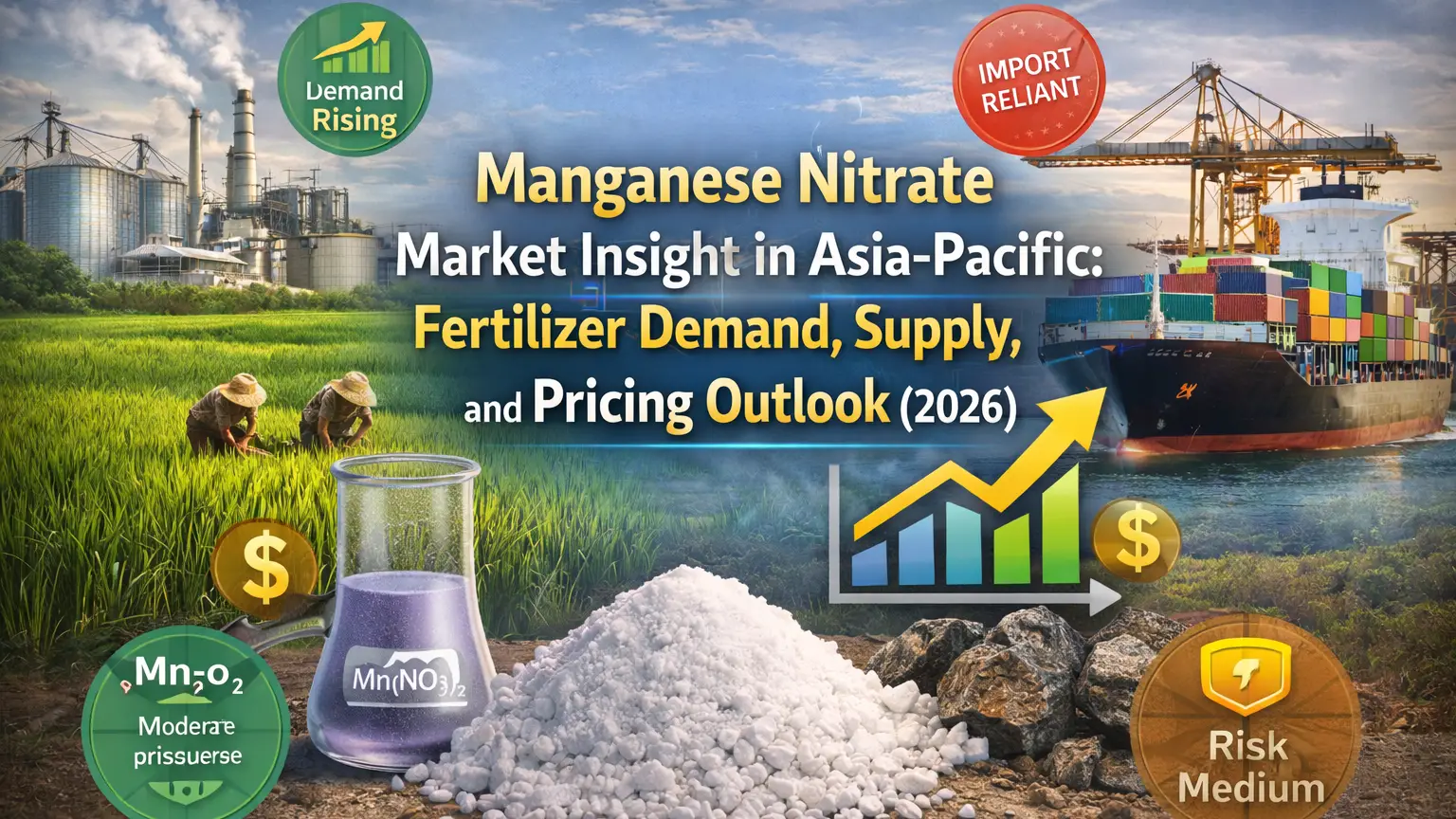
Market Signals – Manganese Nitrate (Asia-Pacific, 2026)
Demand trend: Rising
The Asia-Pacific micronutrient fertilizer market, including manganese compounds, is projected to grow steadily. Valued at USD 1.97 billion in 2025, it is expected to reach USD 2.77 billion by 2030, representing a 6.9% CAGR. Growth is driven by increasing awareness of soil nutrient deficiencies and higher-yield agricultural practices in key crops like rice, wheat, and maize.
Supply condition: Import-reliant
Limited domestic manganese nitrate production in Asia-Pacific indicates strong reliance on imports. Trade records from 2023–2024 show regular shipments from Germany, South Korea, and other established exporters, fulfilling demand in markets such as Indonesia, Malaysia, Vietnam, and India.
Pricing pressure: Moderate
Global manganese nitrate prices averaged around USD 1,020 per metric ton in 2024. Prices are influenced by raw material costs, particularly manganese ore, and shipping rates. Manganese carbonate prices surged 60–70% from 2020–2025, reflecting supply chain constraints and energy cost increases.
Buyer risk level: Medium
Procurement exposure stems from import dependency, logistics uncertainties, and occasional ore shortages. However, steady market growth, predictable crop cycles, and established trading partners mitigate the risk of sudden supply disruptions.
Current Market Snapshot
Asia-Pacific fertilizer markets reached USD 113.6 billion in revenue in 2024, with micronutrients like manganese nitrate benefiting from consistent demand in crop nutrition programs. Imports remain a primary supply source for high-demand markets such as India, Indonesia, and Vietnam.
Pricing pressure remains moderate, mainly affected by upstream ore volatility and freight fluctuations. Despite these challenges, regional buyers maintain steady procurement volumes, supported by well-established trade lanes and predictable fertilizer blending schedules.
Key Demand Drivers
Soil manganese deficiencies affect an estimated 30–40% of cultivated lands across Asia-Pacific. This deficiency drives manganese nitrate usage in fertilizer blends, particularly for staple crops like rice, wheat, and maize.
Agricultural intensification, population growth, and the shift to high-yield cropping systems amplify micronutrient requirements. Sustainable farming initiatives, including precision agriculture, have further increased demand for manganese-based fertilizers in China, India, and Southeast Asia, where the chemical corrects yield-limiting nutrient gaps.
Regulatory focus on soil health and nutrient management also encourages wider adoption of manganese nitrate, particularly in certified sustainable agricultural programs.
Supply and Availability Signals
Domestic manganese nitrate production in Asia-Pacific is limited and largely opaque, with China likely leading regional output due to its dominance in manganese carbonate production. Import dependency is evident, with Europe and North Asia supplying the majority of needs.
Logistics challenges, including occasional freight spikes and manganese ore shortages in 2025, have impacted delivery timelines for Southeast Asian buyers. No significant production capacity expansion was reported in 2024–2025, emphasizing the need for buyers to rely on established, trusted suppliers.
Powdered and crystalline manganese nitrate forms remain preferred for blending efficiency and storage convenience. Procurement planning emphasizes reliable trade lanes and buffer stocks to navigate potential shipment delays.
Buyer Considerations
Procurement teams should focus on supplier reliability, verified quality, and consistent delivery performance. Multi-origin sourcing strategies—combining European exporters for quality assurance with Asian sources for volume stability—help mitigate supply and pricing risks.
Monitoring manganese ore prices and energy cost trends is critical for budgeting, while compliance with regional fertilizer regulations ensures smooth import and usage. Forward contracts and volume agreements can help secure supply amid freight and raw material fluctuations.
Conclusion
The manganese nitrate market in Asia-Pacific is expected to grow steadily through 2026, driven by soil deficiency corrections, agricultural expansion, and sustainable farming practices. While import dependency and logistics constraints create medium-level procurement risks, steady market growth and established trade channels support reliable supply.
Buyers who diversify suppliers, plan buffer stocks, and monitor pricing and regulatory developments will be best positioned to maintain uninterrupted fertilizer production. Manganese nitrate will continue to play a crucial role in crop nutrition programs, supporting high yields and sustainable agricultural practices across Asia-Pacific.
Leave a Comment