
Share this product :
Hydrated Limes
- Origin
- : Vietnam
- CAS Number
- : 1305-62-0
- HS Code
- : 28259040
Basic Info
- IUPAC Name
- : calcium dihydroxide
- Molecular Formula
- : Ca(OH)2
- Molecular Weight (g/mol)
- : 74.0900
- Synonyms & Trade Names
- : Calcium hydroxide; Slaked lime; Hydrated lime; E526
- Purity / Assay (%)
- : 95% min
- Grade / Quality Level
- : Industrial Grade
- Physical Form
- : Solid
- Concentration
- : Pure substance
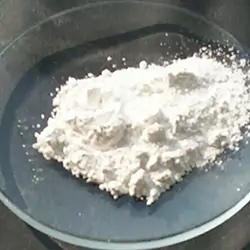
- Appearance / Color
- : White to off-white solid
- Odor
- : Odorless
- Density (g/cm³)
- : 2.2110
- Solubility in Water
- : Slightly soluble (0.16g/100mL)
- Signal Word
- : Warning
- GHS Hazard Class
- : Skin irritant; Eye irritant; Respiratory irritant
- H-Statements
- : H315|H318|H335
- P-Statements
- : P260|P261|P264|P271|P280|P305+P351+P338
- REACH Status
- : Registered
- Drug Precursor Status
- : Non-precursor
- Storage Class (GHS)
- : 10
- Storage Conditions
- : Cool, dry; sealed; away from CO2
Categories
Share this product :
What is Hydrated Limes?
Calcium hydroxide is an inorganic compound with the formula Ca(OH)2. It is a colourless crystal or white powder. It is also known as hydrated lime or slaked lime. It has a boiling point of more than 1000oC and dissolves sparingly in water to give a highly alkaline solution of pH 12 to 13.
Manufacturing Process
Limestone undergoes thermal decomposition at high temperatures to form calcium oxide or burnt lime. Calcium oxide is treated or slaked with water to produce calcium hydroxide on a commercial scale: CaO + H2O → Ca(OH)2.
The calcium oxide is broken down into fine particles of calcium hydroxide in the hydration reaction which occurs in a continuous hydrator. The particle sizes can then be modified through milling to ensure consistent particle size.