
Share this product
Copper Sulphate Anhydrous
- Origin
- United States
- CAS Number
- 7758-98-7
- HS Code
- 2833.25.00
Basic Info
- IUPAC Name
- copper(2+) sulfate
- Molecular Formula
- CuSO4
- Molecular Weight (g/mol)
- 159.6100
- Synonyms & Trade Names
- Copper sulphate anhydrous; Cupric sulfate; Copper(II) sulfate
- Purity / Assay (%)
- 99% min
- Grade / Quality Level
- Technical Grade
- Physical Form
- Solid
- Concentration
- Pure substance
- Appearance / Color
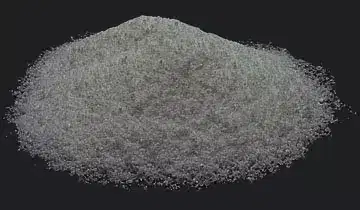
- White to off-white solid
- Odor
- Odorless
- Density (g/cm³)
- 3.6000
- Solubility in Water
- Slightly soluble
- Signal Word
- Warning
- UN Number
- 3077
- GHS Hazard Class
- Acute toxic; Eye irritant; Aquatic hazard
- H-Statements
- H302|H318|H400|H410
- P-Statements
- P260|P264|P270|P273|P280|P301+P312|P305+P351+P338|P391
- REACH Status
- Registered
- Drug Precursor Status
- Non-precursor
- Storage Class (GHS)
- 6.1
- Storage Conditions
- Cool, dry; away from moisture
Categories
Technical Document
Brief Overview
Copper(II) sulfate is a chemical compound with the molecular formula CuSO4. This salt compound has a physical form in anhydrous in the form of pale green or gray-white powder and also in the pentahydrate form (CuSO4.5H2O) which is bright blue. Copper Sulfate is also known under the names "blue vitriol" and "bluestone". The anhydrous form is found in the form of a rare mineral called chalcocyanite. Hydrated copper sulfate exists in nature in the form of chalkantite (pentahydrate) and 2 other, rarer minerals: bonatite (trihydrate) and bootite (heptahydrate).
Manufacturing Process
Copper(II) sulfate is produced on a large scale by mixing copper metal with hot sulfuric acid or its oxide with sulfuric acid. For laboratory use, copper(II) sulfate is mostly purchased (not produced manually).
The anhydrous form is found in the form of a rare mineral called chalcocyanite. Hydrated copper sulfate exists in nature in the form of chalkantite (pentahydrate) and 2 other, increasingly rare minerals: bonatite (trihydrate) and bootite (heptahydrate).