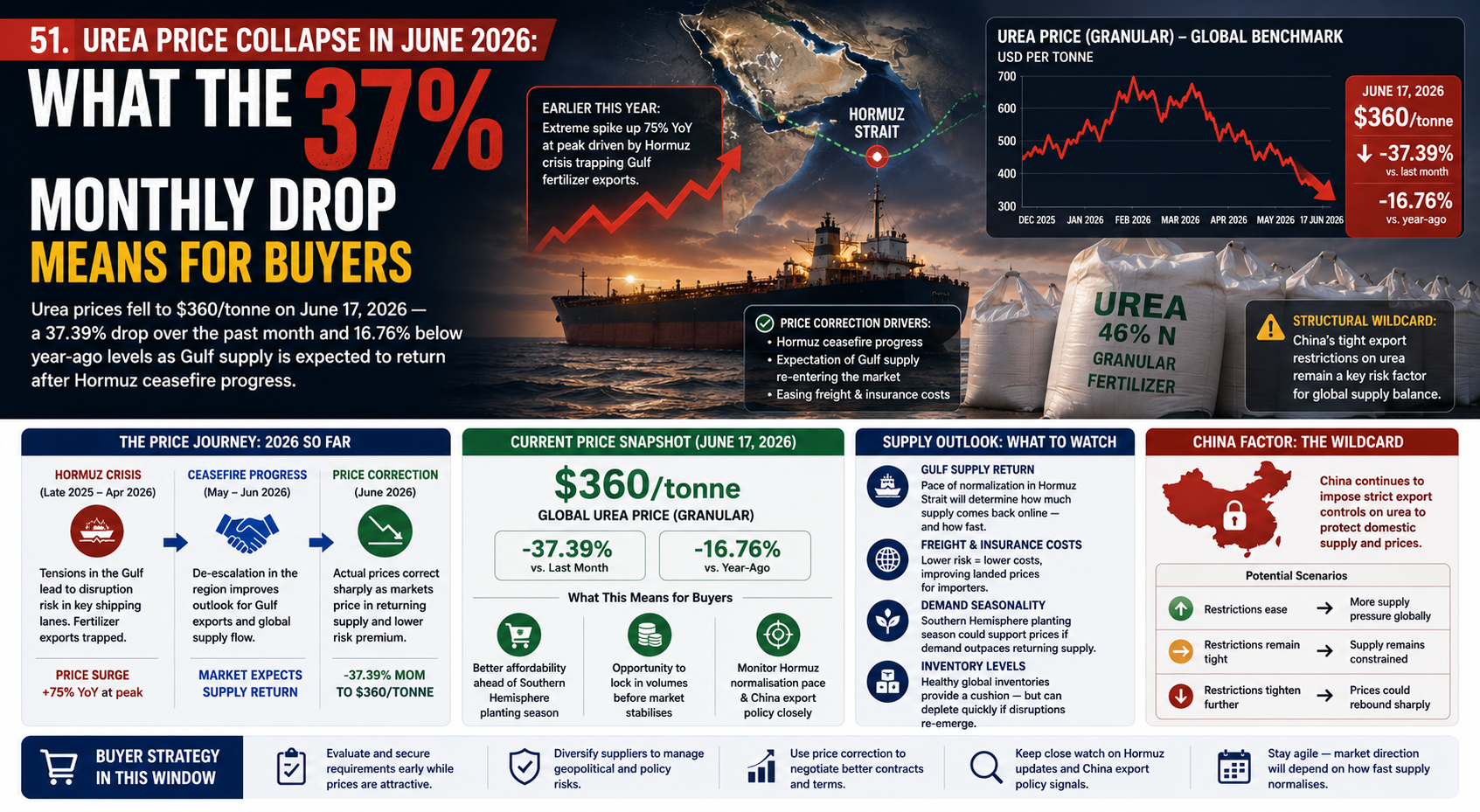
Urea (Granular) - Egypt CAS: 57-13-6


In early 2026 the global chemical market saw a dramatic price spike during the Hormuz crisis, only to reverse course by April even before shipping lanes fully reopened. This article dissects the panic‑driven surge, the factors that triggered the drop, and the procurement intelligence lessons that can help buyers mitigate volatility.

The June 2026 fertilizer intelligence report covers the volatile first half, examines Gulf supply recovery, and projects urea and DAP outlooks for the second half. It highlights key price drivers, inventory trends, and policy impacts shaping the 2026 market.
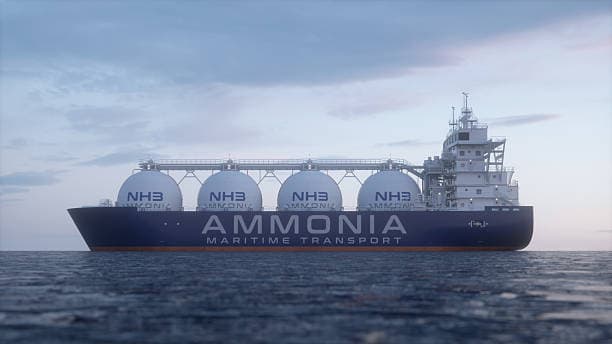
QAFCO and SABIC have restarted ammonia export operations to the Gulf, signaling a rebound in regional supply that will shape 2026 market dynamics. The move opens new sourcing options for fertilizer producers and industrial buyers, while influencing global ammonia prices and feedstock availability. Below we explore the implications for the market, pricing trends, and the broader fertilizer sector.
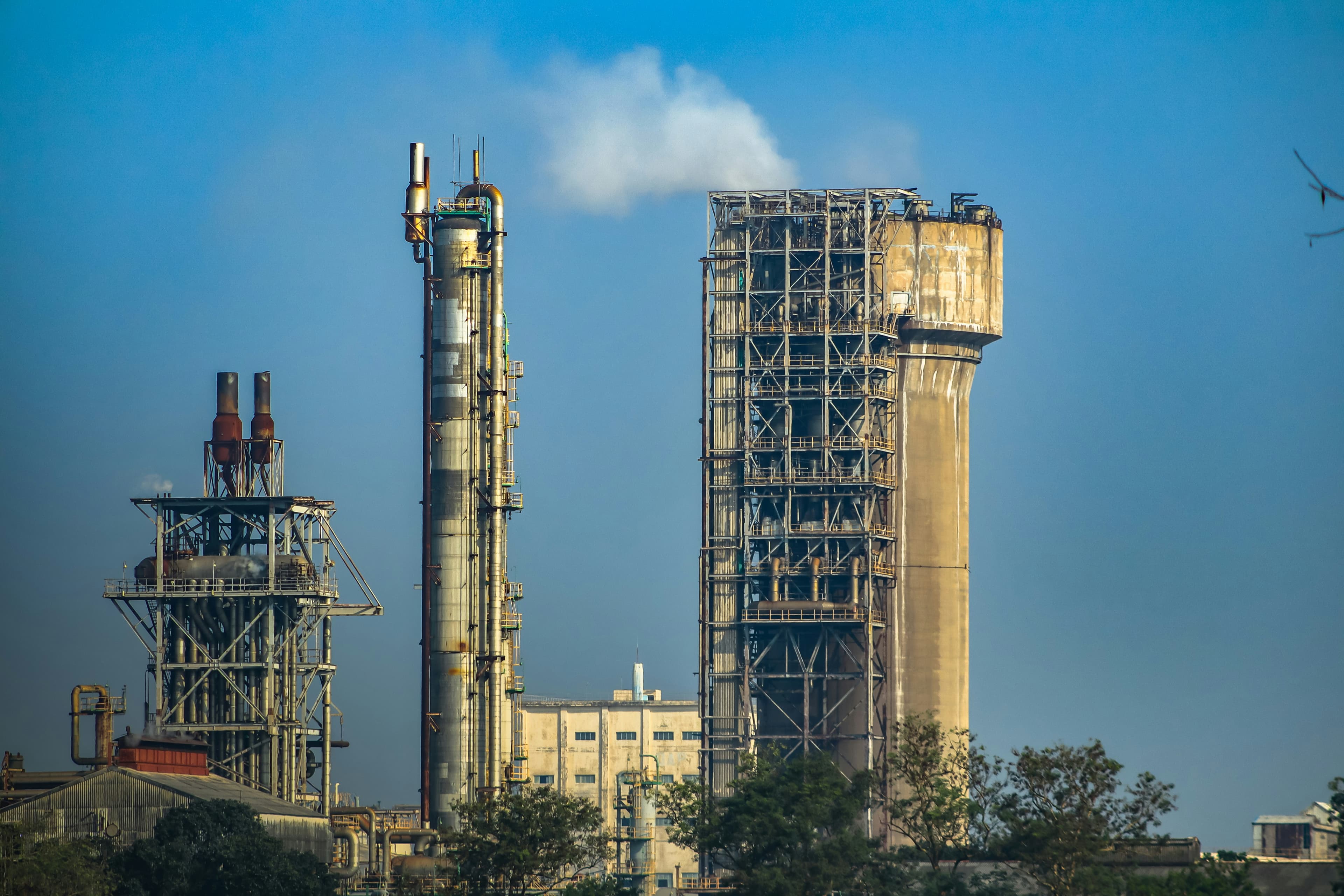
Urea prices have dropped sharply after the Hormuz MOU, creating potential buying opportunities for fertilizer buyers despite ongoing supply recovery challenges.

Sulfur prices doubled from January to April 2026, driven by the collapse of Gulf refinery output
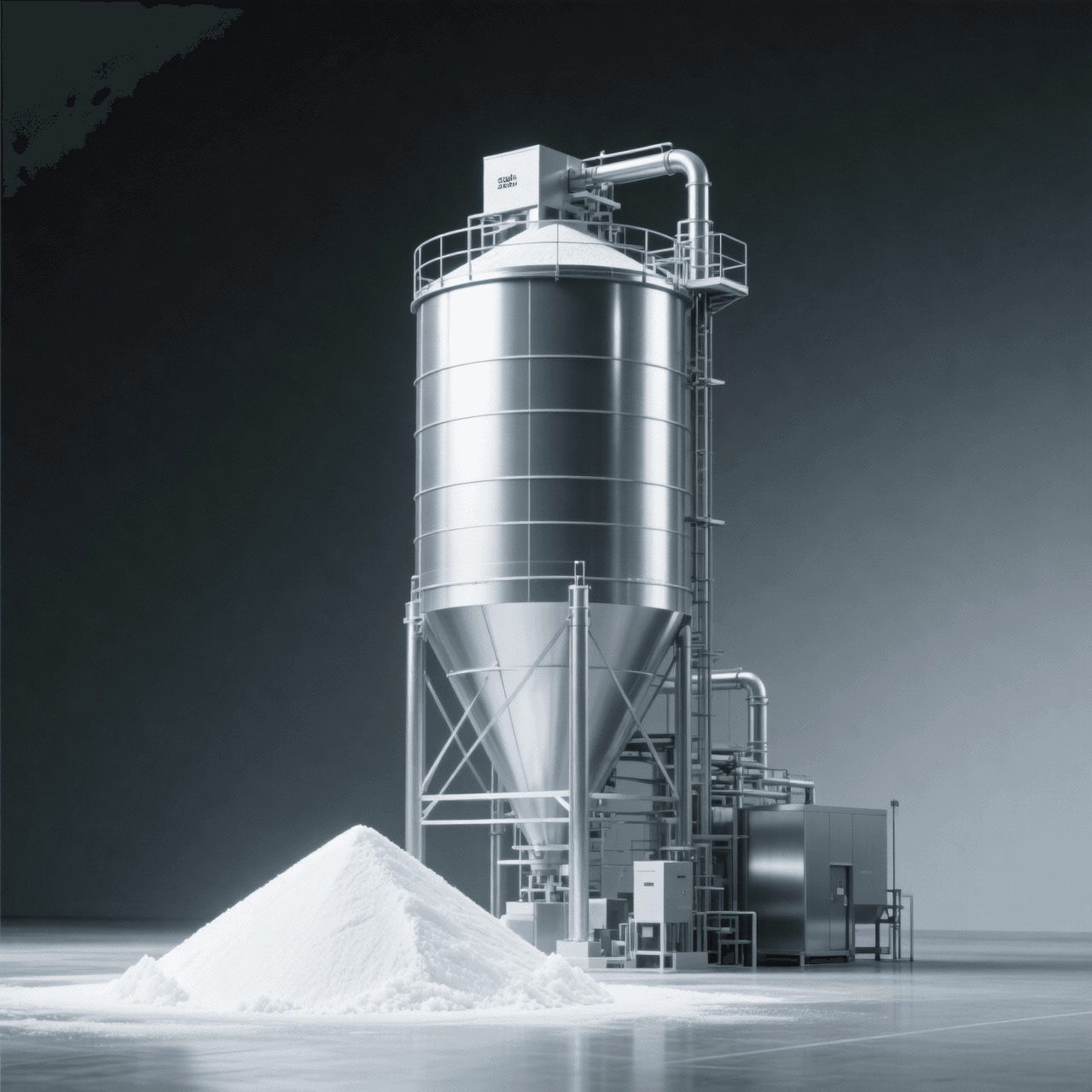
The sulfuric acid market is expected to see changing supply conditions as Middle East sulfur availability improves after Hormuz disruptions. Fertilizer and mining buyers should monitor sulfur recovery, energy trends and pricing movements through H2 2026.
We're committed to your privacy. Tradeasia uses the information you provide to us to contact you about our relevant content, products, and services. For more information, check out our privacy policy.