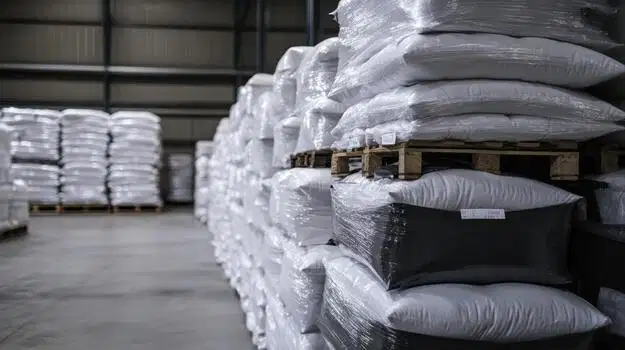
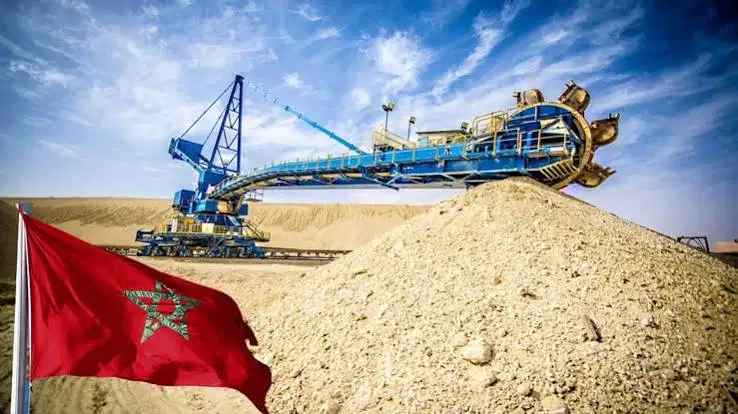
The global phosphate fertilizer market has entered the second half of 2026 with sulfur availability once again emerging as one of its defining commercial variables. OCP Group, the world's largest phosphate producer, has highlighted that its long-term expansion of triple superphosphate (TSP) production proved strategically advantageous as disruption around the Strait of Hormuz tightened global sulfur availability. In its recent financial communications, OCP noted that higher TSP production requires less sulfur per tonne of plant nutrient than many alternative phosphate fertilizer products, providing greater flexibility during a period of constrained sulfur supply. The company also confirmed that it secured strategic sulfur inventories ahead of the market disruption while continuing to optimise its product portfolio around changing raw material economics.
Sulfur remains one of the most critical upstream inputs in phosphate fertilizer production because it is converted into sulfuric acid, which is required to process phosphate rock into finished fertilizers. A substantial share of internationally traded sulfur originates as a by-product of oil and gas processing in Gulf countries, making fertilizer producers indirectly exposed to disruptions affecting regional refining, shipping, and export logistics. The renewed geopolitical escalation following the July ceasefire collapse has therefore revived concerns that the modest improvement in Gulf sulfur movements seen after convoy operations began may prove temporary rather than structural. While shipping conditions had shown signs of gradual recovery, renewed instability increases uncertainty over sulfur availability, transportation costs, and delivery reliability for phosphate producers dependent on Gulf-origin supply. OCP itself has acknowledged that sulfur market conditions became particularly strained during the crisis and has identified alternative sulfur sourcing—including recovery from pyrite and pyrrhotite—as part of its longer-term strategy to reduce structural dependence on external sulfur markets.
Why OCP's Atlantic Supply Chain May Regain a Commercial Advantage
For phosphate fertilizer buyers, the renewed market uncertainty shifts attention back toward supply chain resilience rather than simply comparing quoted fertilizer prices. During periods when Gulf logistics appeared to stabilise, some buyers began reconsidering Gulf-origin DAP and related phosphate products as competitive alternatives. However, renewed disruption risk once again highlights the strategic benefit of OCP's Atlantic export position. Morocco's primary production and export infrastructure operates outside the Strait of Hormuz, allowing finished fertilizer exports to move through Atlantic shipping routes even though sulfur remains an imported input. This geographic positioning does not eliminate OCP's exposure to sulfur market volatility, but it does reduce direct dependence on one of the world's most sensitive maritime chokepoints for finished product exports. As a result, buyers increasingly evaluate not only product price but also the reliability and predictability of supply under different geopolitical scenarios.
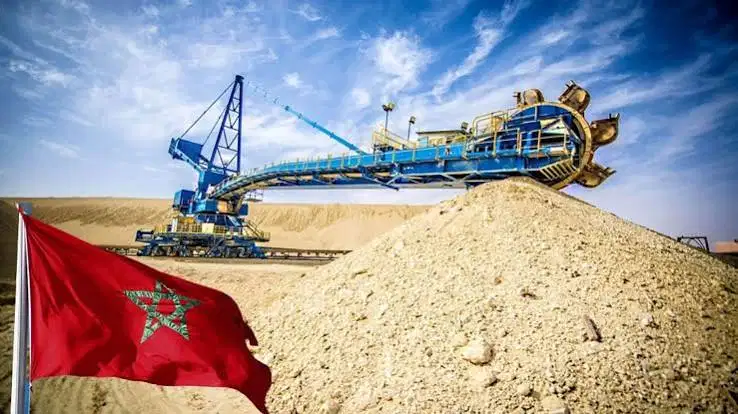
Attention is now turning to OCP's July phosphate tender activity, which will provide one of the earliest market signals following the renewed escalation. While tender outcomes cannot be predicted with certainty, procurement professionals should monitor whether participants incorporate additional risk premiums associated with sulfur availability, freight uncertainty, and Gulf supply reliability. Clearing prices will reflect multiple variables, including crop economics, seasonal fertilizer demand, inventory levels, Chinese export policy, sulfur costs, and buyer expectations regarding future logistics. Rather than focusing solely on the headline price, buyers should assess the commercial assumptions embedded within the tender results and compare them with evolving sulfur and freight market conditions.
For procurement teams, the current environment reinforces the importance of integrating raw material intelligence with supplier evaluation. Fertilizer sourcing decisions should incorporate sulfur supply exposure, production flexibility, inventory strategies, export route resilience, and contingency planning alongside traditional price comparisons. OCP's strategy demonstrates that product portfolio flexibility and diversified raw material planning can become significant competitive advantages during periods of supply disruption. Whether or not Gulf logistics improve in the coming months, the events of 2026 have shown that upstream sulfur availability can rapidly reshape phosphate fertilizer economics. Buyers that monitor sulfur fundamentals alongside finished fertilizer markets will be better positioned to anticipate supply changes and build sourcing strategies capable of adapting to continued geopolitical uncertainty.
Looking for phosphate procurement intelligence? Monitor sulfur availability, OCP tender outcomes, and regional logistics together—phosphate pricing increasingly reflects supply chain resilience as much as fertilizer demand.