

India's specialty chemical industry is entering 2026 with a more challenging growth outlook after several years of strong expansion. CRISIL Ratings expects revenue growth for specialty chemical manufacturers to moderate by around 200 basis points this fiscal year from approximately 8% in each of the previous two fiscals.
The slowdown is particularly relevant for exporters because international demand remains an important growth engine for India's specialty chemical producers. Weaker exports, combined with changes to China's chemical export tax incentives, could increase pricing pressure and make competition more intense across global markets.
For chemical traders and procurement managers, the shift creates a market where supplier selection, pricing discipline and supply diversification become increasingly important.
Export Demand Becomes a Major Growth Constraint
India's specialty chemical sector has benefited from global customers looking to diversify supply chains beyond China. This China-plus-one strategy helped Indian manufacturers strengthen relationships with international buyers across pharmaceuticals, agrochemicals, automotive, coatings, personal care and industrial applications.
However, the growth environment has become less straightforward. Export demand has weakened, limiting the ability of Indian manufacturers to maintain the growth rates achieved during the previous two fiscal years.
A slowdown from approximately 8% growth by 200 basis points still represents expansion, but it changes the commercial environment for producers. Companies that previously relied on strong export volumes may now need to compete more aggressively for individual contracts and customer programs.
This can influence pricing, production planning and inventory decisions throughout the specialty chemical supply chain.
China's VAT Rebate Change Adds Competitive Pressure
One of the most important developments affecting the market is China's April 2026 withdrawal of VAT export rebates on several chemical products. The change alters the economics of exporting selected Chinese chemicals and can affect international pricing dynamics.
For Indian exporters, the impact depends heavily on the products and markets involved. Where Chinese suppliers remain highly competitive despite the removal of rebates, Indian producers could face additional pricing pressure.
Where the policy reduces China's export advantage for particular products, Indian manufacturers may gain opportunities to strengthen their position with global customers.
This creates a more complex competitive environment rather than a simple shift away from China. Exporters must therefore monitor individual product markets instead of assuming that the China-plus-one trend automatically translates into higher Indian volumes.
Indian Producers Face a More Competitive Export Market
Specialty chemicals differ from commodity chemicals because customers often evaluate suppliers on product performance, consistency, technical support and regulatory capabilities alongside price. These factors can provide Indian producers with stronger customer relationships and some protection against purely price-driven competition.
However, international buyers still face pressure to control procurement costs. When chemical markets soften, purchasing teams typically increase price comparisons between qualified suppliers and may negotiate harder on contract terms.
Indian exporters therefore need to demonstrate the complete commercial value of their products. Reliable quality, consistent batches, responsive technical service and dependable delivery can become important differentiators when price competition increases.
For buyers, this creates an opportunity to reassess existing supplier portfolios. A slower growth market can make it easier to negotiate with suppliers that want to protect utilization and maintain export volumes.
China Plus One Is Not a Guaranteed Growth Engine
The China-plus-one strategy remains an important opportunity for Indian specialty chemical manufacturers, but the current slowdown shows why companies cannot depend entirely on geographical diversification trends.
Global buyers may want alternatives to Chinese suppliers, but they still evaluate landed cost, production scale, technical specifications and delivery reliability. Indian manufacturers must therefore compete on both diversification value and commercial performance.
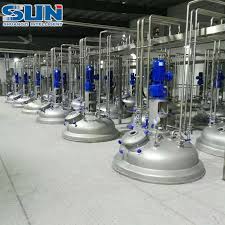
Recent market activity also shows that India's specialty chemical sector continues to attract interest from international customers seeking alternative supply sources. The opportunity is increasingly moving toward specialized molecules, contract manufacturing and higher-value applications rather than relying only on broad-based volume growth.
This distinction matters for exporters. Companies with differentiated products and established customer relationships may be better positioned to maintain growth than producers competing primarily on price.
Pricing Strategy Will Matter More in 2026
A slower growth environment puts greater emphasis on pricing discipline. Exporters cannot assume that additional volume will compensate for weaker margins if international customers push aggressively for lower prices.
Producers need to evaluate the full cost of serving each market. Freight, energy, raw materials, financing, insurance, compliance and currency movements can all affect export profitability.
Long-term contracts can provide greater revenue visibility, but exporters also need mechanisms that protect margins when input costs or logistics expenses change. Flexible pricing structures may become more important for products exposed to significant commodity or freight volatility.
For buyers, this environment creates room to compare contract structures rather than focusing only on the initial quoted price.
Overseas Buyers Could Gain More Negotiating Leverage
The expected moderation in Indian specialty chemical growth could change the balance between suppliers and buyers in selected product categories. Exporters seeking to maintain customer volumes may become more receptive to longer-term commitments, larger purchase programs or expanded customer relationships.
Procurement teams can use this environment to conduct broader supplier benchmarking. Buyers should compare Indian suppliers against qualified producers from China, Southeast Asia, Europe and other major chemical manufacturing regions.
The objective should not simply be to force prices lower. A more valuable approach is to negotiate a combination of competitive pricing, predictable lead times, quality consistency and supply commitments.
This can create stronger commercial relationships while giving buyers greater protection against future supply disruptions.
Product Differentiation Could Protect Indian Exporters
The 2026 slowdown may encourage Indian manufacturers to accelerate their shift toward higher-value specialty chemicals. Differentiated products can offer stronger margins and reduce direct exposure to large-scale commodity competition.
Manufacturers with specialized production capabilities can also build deeper relationships with customers because qualification requirements often make supplier replacement more difficult. This can improve customer retention even when overall market growth slows.
Contract manufacturing and custom synthesis offer another potential route. Global pharmaceutical, agrochemical and industrial companies increasingly require specialized production partners capable of meeting technical and regulatory requirements.
The current environment could therefore separate Indian exporters into two broad groups. Producers with differentiated products, strong customer relationships and efficient operations may continue expanding, while companies relying heavily on volume growth could face greater pressure.
What Chemical Buyers Should Watch
International buyers sourcing specialty chemicals from India should monitor several indicators throughout 2026. Export order trends can reveal changes in overseas demand before they become visible in broader production figures.
Supplier utilization is another useful signal. If a manufacturer experiences weaker export demand, additional available capacity could create opportunities for new contracts or improved commercial terms.
Buyers should also monitor Chinese pricing for competing products. China's VAT rebate changes can alter relative competitiveness across individual chemical categories, making product-level market analysis more useful than broad country comparisons.
Currency movements, freight costs and regional trade policies should also remain part of procurement reviews. These factors can quickly change the landed-cost advantage between competing origins.
Buyer Action Checklist for Indian Specialty Chemicals
Procurement teams can take several practical steps to manage the changing market:
Benchmark at least three qualified origins: Compare Indian suppliers with alternative producers in China, Southeast Asia, Europe or other relevant markets.
Review landed cost: Include freight, insurance, duties, inland transportation and financing rather than comparing ex-works or FOB prices alone.
Revisit annual contracts: Check whether existing agreements provide adequate pricing flexibility if market conditions continue to soften.
Qualify backup Indian suppliers: Maintain more than one approved producer for strategically important specialty chemicals.
Track Chinese competitor pricing: China's policy changes can influence international pricing even when the buyer purchases from India.
Assess supplier utilization: Available production capacity may create opportunities for improved pricing or faster delivery.
Verify quality consistency: Request recent certificates of analysis, technical specifications and relevant compliance documentation before increasing volumes.
Negotiate volume commitments carefully: Larger commitments can provide pricing advantages, but buyers should avoid unnecessary exposure if demand remains uncertain.
Prioritize differentiated products: For critical applications, evaluate technical performance and supplier reliability instead of selecting purely on price.
Review logistics routes: Compare direct shipping options, transit times and inventory requirements for Indian-origin material before finalizing contracts.
These actions can help buyers capture the benefits of a more competitive sourcing environment without sacrificing supply security.
India's Export Opportunity Is Entering a More Selective Phase
The projected 200 basis point slowdown does not signal the end of India's specialty chemical growth story. Instead, it points toward a more selective market in which export performance, product differentiation and cost competitiveness will determine which manufacturers continue to outperform.
India retains important advantages in specialty chemicals, including manufacturing expertise, established export relationships and a growing role in global supply-chain diversification. The challenge is converting those structural advantages into sustainable growth while international competition becomes more intense.
For exporters, 2026 may require greater attention to customer retention, operational efficiency and higher-value products. For international buyers, the slower growth environment can provide opportunities to negotiate competitive contracts and expand qualified supplier networks.
The next phase of India's specialty chemical market will likely depend less on broad export expansion and more on the ability of individual manufacturers to deliver differentiated products at competitive landed costs. Buyers that benchmark suppliers carefully and build flexible sourcing strategies will be better positioned as the market adjusts. Ready to source Titanium Dioxide from verified global suppliers? Explore competitive offers on our platform today.
Titanium Dioxide CAS: 13463-67-7
Source link
https://www.crisilratings.com/en/home/newsroom/press-releases/2026/07/specialty-chemical-makers-set-to-catalyse-6-percent-revenue-growth.html · https://www.fortunebusinessinsights.com/specialty-chemicals-market-105517 · https://www.agribusinessglobal.com/agrochemicals/7-chinese-agrochemical-companies-to-watch-in-2026/