
Basic Chromium Sulphate CAS: 10101-53-8
Related Insights
China's August Phosphate Export Halt: Impact on Global Fertilizer Markets
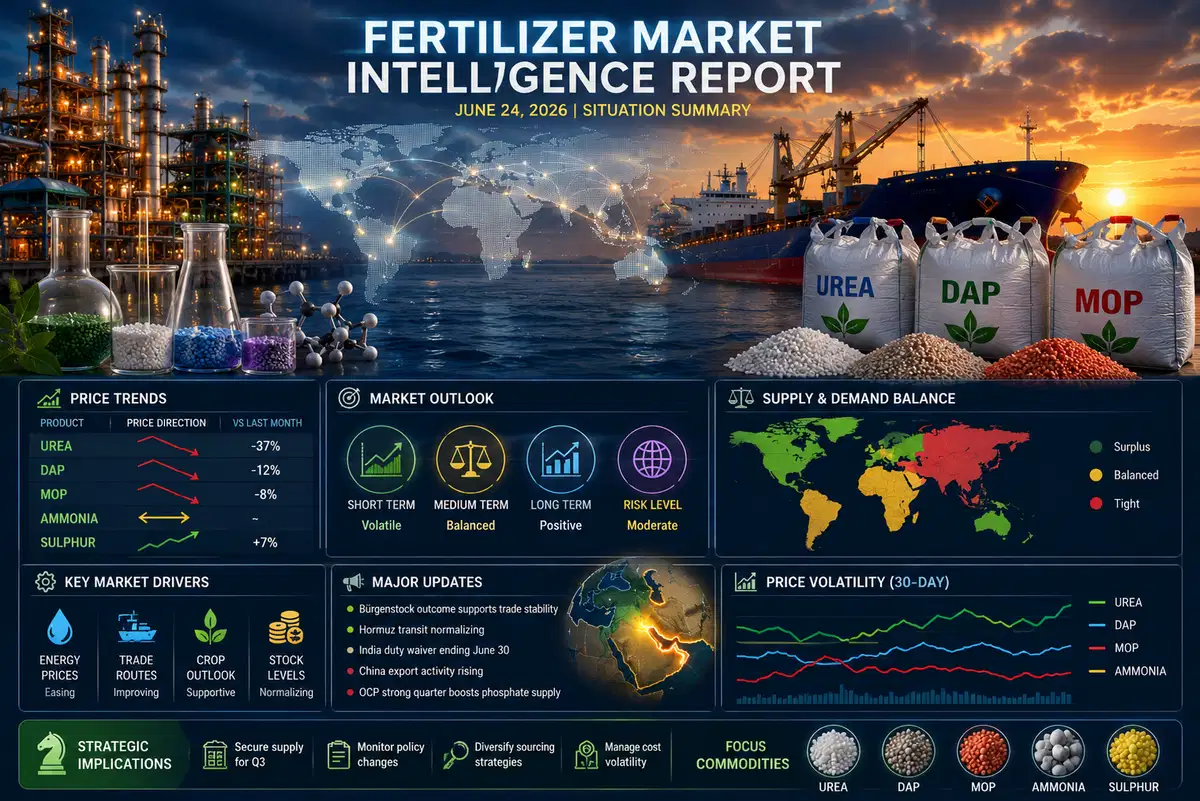
China may halt urea and phosphate exports until August 2026. This decision removes millions of tons from the global market, forcing buyers to secure alternative supplies immediately.
China's Phosphate Export Halt Tightens Urea Supply and Reshapes Ammonia-Linked Petrochemical Pricing
China's decision to withhold urea and phosphate exports until August is tightening nitrogen chemical supply and creating new pressure across ammonia-linked petrochemical pricing. Buyers and traders now face a more complex sourcing environment as fertilizer trade restrictions influence broader chemical markets.

China’s Phosphate Export Halt Until August Tightens Global Fertilizer Supply
China’s decision to withhold phosphate exports until August is tightening the world’s most vital crop nutrient supply. The move is driving up fertilizer prices, raising crop input costs, and creating ripple effects across global food supply chains. Farmers and food companies must adapt to this new uncertainty.

DAP Prices Signal Tight Phosphate Trade
The recent persistence of DAP price strength underscores a tightening phosphate supply chain, heightened global fertilizer demand, and growing procurement risks for agriculture stakeholders. As phosphate trade remains constrained, buyers must reassess sourcing strategies amid volatile market conditions.

Five-Country Fertilizer Concentration: An Intelligence Baseline Worth Revisiting
Global fertilizer exports remain heavily concentrated among China, Russia, Morocco, Saudi Arabia and the United States, creating an unusually concentrated supply landscape. As recent export decisions have demonstrated, policy changes from any one of these major producers can rapidly influence international prices, procurement strategies and agricultural supply chains.

Ranking China's Export Timing Tools Against Its Earlier 2026 Trade Restrictions
China's latest phosphate export halt continues a broader pattern of export timing restrictions that first became evident earlier in 2026 through tighter urea export controls. Rather than representing isolated trade actions, these measures illustrate how export timing has become an increasingly important policy tool influencing global fertilizer markets, pricing and procurement strategies.
Don't miss out on our updates! Subscribe to our newsletter now
We're committed to your privacy. Tradeasia uses the information you provide to us to contact you about our relevant content, products, and services. For more information, check out our privacy policy.