Cape of Good Hope Reroutes Would Add Weeks to Fertilizer Delivery Timelines
For fertilizer, distance is not just a freight problem. It’s a season problem.
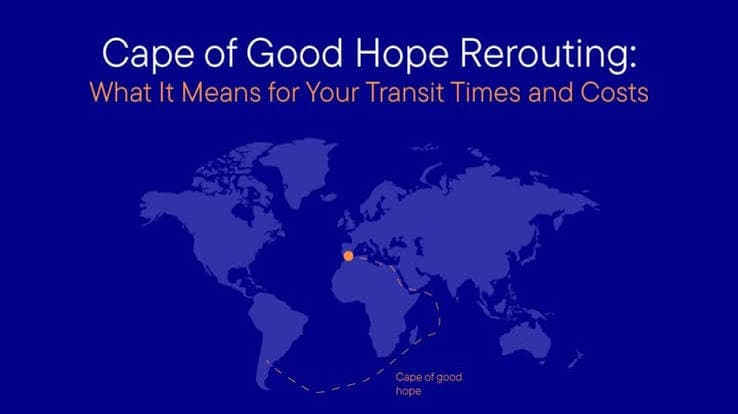
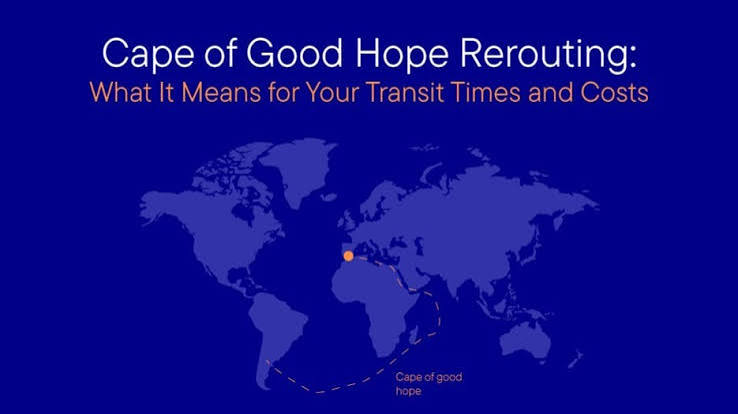
If Bab el-Mandeb closes, every bulk vessel carrying urea, DAP, MOP, or NPK from the Middle East and India to Africa, Europe, and the Americas has to go around the Cape of Good Hope. That’s roughly 2,700 extra nautical miles on paper.
In reality, it’s 14 to 21 extra days on the water, plus port congestion at both ends. And in fertilizer trade, two weeks is the difference between hitting the planting window and missing it entirely.
1. Why 2,700 Miles Hits Fertilizer Harder Than Most Chemicals
Specialty chemicals lose money when they are delayed. Fertilizer buyers lose a market.
Bulk vessels are already stretched thin. Unlike containerized chemicals, fertilizer moves in large bulk and break-bulk vessels — Handysize, Supramax, and Panamax. There are fewer of them available, and they cannot be quickly re-routed. If 30% of that fleet is suddenly tied up for an extra 3 weeks going around Africa, effective capacity drops immediately. That means fewer vessels to load your next shipment, even if your cargo is ready.
The seasonal clock is unforgiving. A coatings manufacturer can wait 2 weeks for an additive. A distributor waiting for urea for the Rabi season in India or for planting in East Africa cannot. If a Cape reroute pushes your DAP arrival from late July to mid-August, you are not just paying more freight — you are competing with everyone else who also arrived late and is now dumping stock.
Handling losses increase. Longer voyages mean more exposure to humidity, caking, and cargo shifting, especially for urea prills, MOP granules, and blended NPKs. We are already seeing buyers report higher insurance claims for moisture damage on Cape-routed fertilizer shipments from previous disruptions.
2. The Real Cost Beyond Freight
Everyone will quote you the extra $18 to $25 per metric ton in freight for the Cape route. That’s not the real number.
Here is what experienced fertilizer importers are budgeting for:
1. Demurrage at destination. When 15 bulk vessels that all took the Cape route arrive within the same week at Mombasa, Dar es Salaam, or Kandla, the port cannot discharge them at once. Expect 4-6 day waiting at anchorage. At $20,000 per day for a Supramax, that cost gets passed on.
2. Bagging and inland transport squeeze. Your fertilizer might finally arrive, but if your bagging plant and truckers are booked for the peak season, you will pay a premium to move it inland. A 2-week delay at sea can turn into a 4-week delay to the farmer.
3. Price volatility on arrival. If you bought on a spot C&F basis and the market drops while your vessel is taking the long route, you are stuck with expensive inventory. If the market spikes, your supplier may try to renegotiate before discharge.
3. How Fertilizer Buyers Are Adjusting Right Now
You can’t control Bab el-Mandeb. You can control where your next load comes from and where it is already sitting.
This is what we are seeing work on our marketplace this week:
Buy from stock that has already cleared the chokepoint. Instead of booking fresh production from the Gulf, buyers are actively sourcing urea and DAP that is already in stock in Berbera, Djibouti, or inland warehouses in Tanzania and India. It costs slightly more per ton, but it ships in 3 days, not 25.
Split your vessels. Instead of booking one 25,000 MT vessel from one origin, smart buyers are splitting into 2 x 12,500 MT from two different origins — for example, one from the UAE and one from China or Morocco. If one is forced via the Cape, the other still hits your season.
Lock your inland chain before your sea chain. Confirm your bagging, trucking, and warehousing at destination before you confirm the vessel. In a Cape reroute scenario, the port will be congested. The buyer who has trucks waiting on standby unloads first.
If you have a fertilizer requirement for the next 60 days, post it on our platform with your destination port and preferred delivery window. We’ll connect you with verified suppliers who have physical stock positioned outside the Red Sea corridor — ready to move without a 2,700-mile detour.
In this market, the cheapest fertilizer is not the one with the lowest FOB price. It’s the one that actually arrives on time.
Caprylic Acid CAS: 0124-07-02